
Last updated November 15, 2026
 AC repair
 Furnace & heating
 Heat pumps
 Ductless mini splits
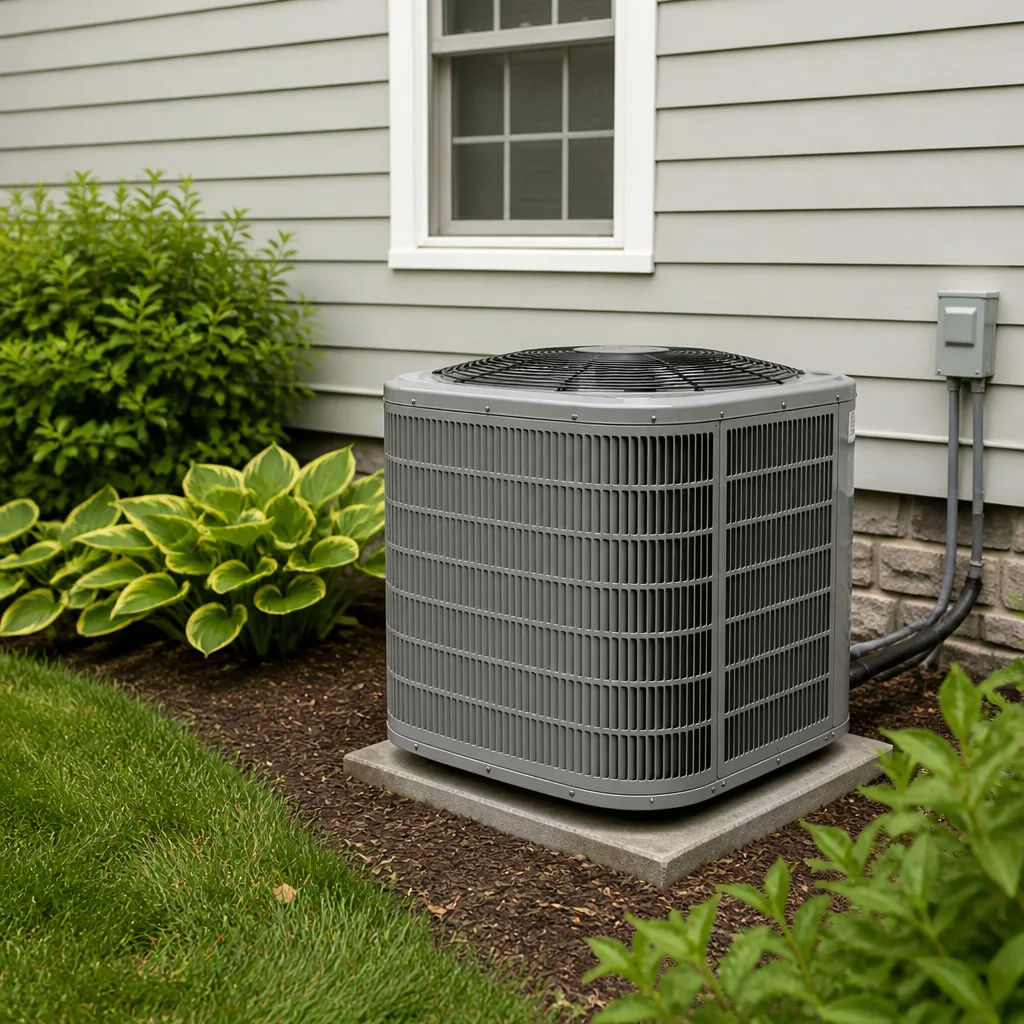 Carrier
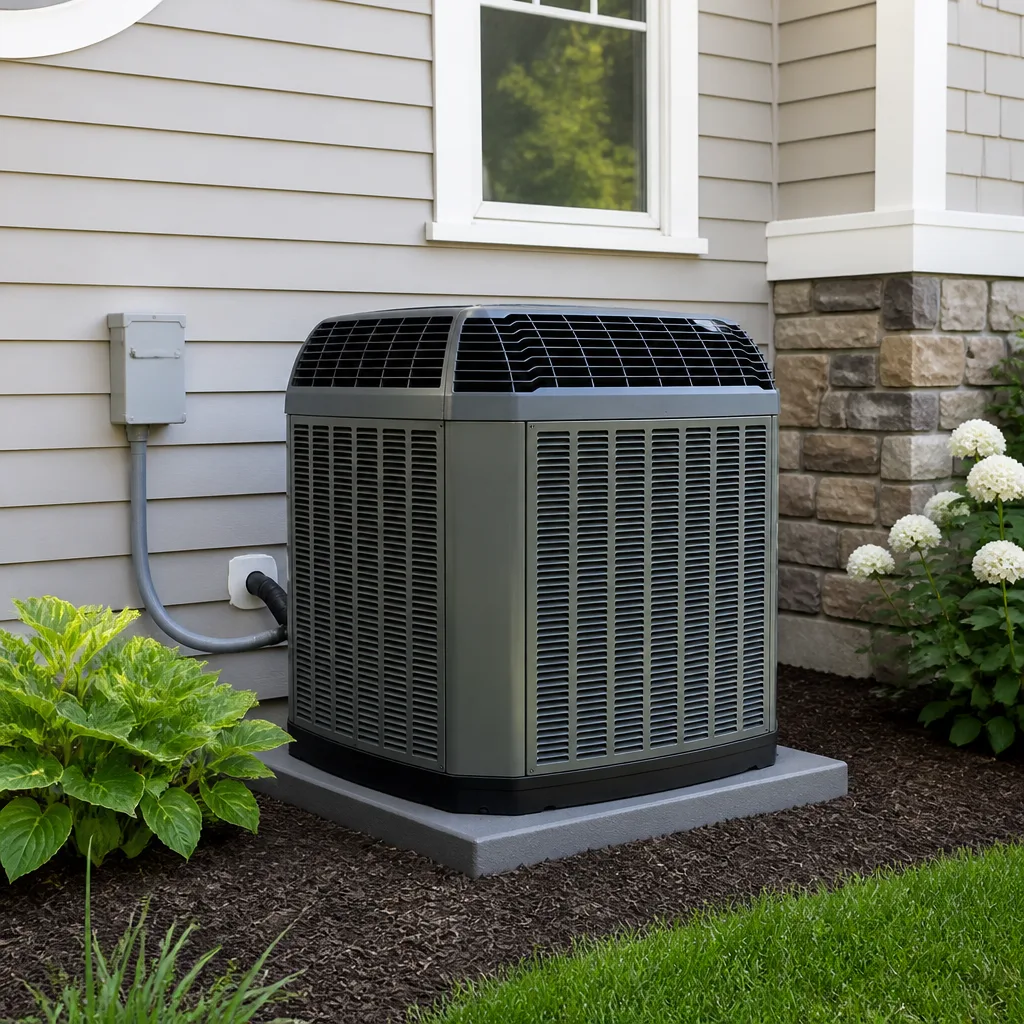 Trane
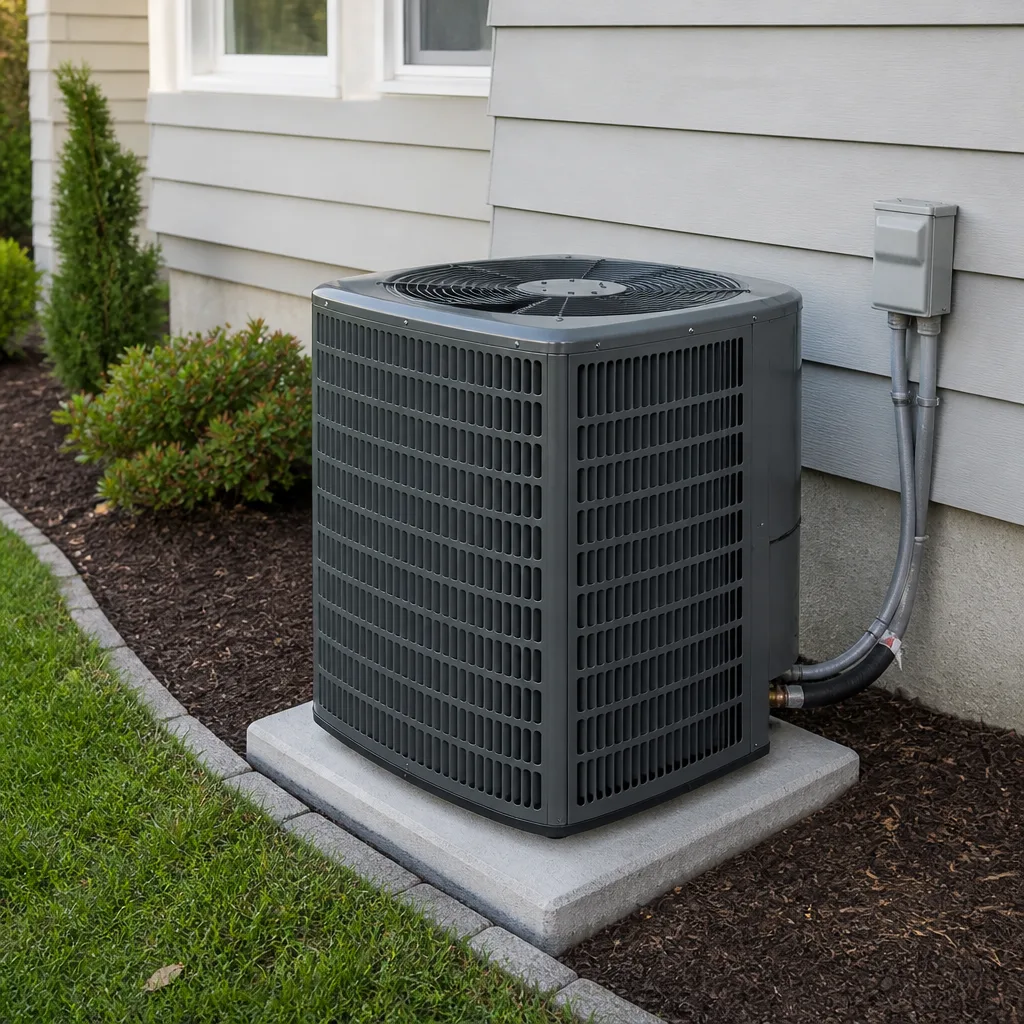 Goodman
Seasonal tune-up and full diagnostic on your Carrier, Trane, or Goodman system - readings shown to you before any repair is proposed
Diagnosis first, numbers second - you approve the repair price before a single part goes in.
Get your free estimateThe Complete AC Installation Guide for Sunrise Manor Homeowners
Most air conditioning systems that fail early were sized with a square-footage shortcut, and that shortcut is exactly what the Manual J load calculation protocol was written to replace. In a place where summer afternoons push past 115°F, a unit that’s a half-ton off doesn’t just run a little longer. It runs constantly, never fully dehumidifies, and wears its compressor out years ahead of schedule. The homeowner usually blames the brand. The real problem was the math at the start. This guide walks through every decision point in a Sunrise Manor AC installation, from load calculation and attic insulation to Clark County permitting and the post-install checks that prove the job was done right.
Quick Answer
A successful AC installation in Sunrise Manor starts with a room-by-room Manual J load calculation, not a square-footage estimate, because the Vegas valley’s extreme design temperatures and radiant heat load routinely push real cooling demand higher than generic sizing tools predict. Once you have an accurate tonnage figure, you choose a system type (single-stage, two-stage, or variable-speed) based on how the house runs through a long cooling season, pull the required permit through Clark County, and verify refrigerant charge, static pressure, thermostat calibration, and condensate drainage before the installer leaves. Skipping any of those steps is what separates a system that lasts from one that struggles.
Styles & brands we work with
- AC repair
- Furnace & heating
- Heat pumps
- Ductless mini splits
- Carrier
- Trane
- Goodman
Table of Contents
- Why Manual J Load Calculations Matter More in Sunrise Manor
- What to Ask a Contractor to Confirm They Ran a Real Load Calculation
- How Attic Insulation and Duct Placement Affect the Right Tonnage
- The Clark County Permit Process: What’s Required and What Happens If It’s Skipped
- Single-Stage, Two-Stage, or Variable-Speed: Matching the System to Sunrise Manor Runtime Demands
- A Brand-Agnostic Look at Trane, Lennox, Goodman, and Rheem
- The Post-Installation Checklist: What Must Be Verified Before the Technician Leaves
- Common Mistakes to Avoid
Why Manual J Load Calculations Matter More in Sunrise Manor
A load calculation is the engineering step that determines how much cooling a house actually needs. It factors in square footage, but also window orientation, ceiling height, insulation levels, air infiltration, the number of occupants, appliance heat, and the local outdoor design temperature. In a mild climate, a sloppy load calculation might be off by a fraction of a ton and the system still keeps up. In Sunrise Manor, where the design temperature is far higher than the national average, those same errors compound.
Here’s what that means in practice. A rule-of-thumb sizing based on “500 square feet per ton” often produces a system that’s undersized for the actual thermal load in a Sunrise Manor home with west-facing windows and an under-insulated attic. An undersized unit runs at or near 100% capacity through the hottest hours, day after day, all summer. That constant runtime is what kills compressors early and drives up every monthly bill.
The opposite error matters too. An oversized system cools the air fast but doesn’t run long enough to pull humidity out, and in a dry climate that’s less of a comfort issue than a runtime issue: short cycling wears the compressor’s start components and never lets the system reach its most efficient operating point. Either way, the answer isn’t a bigger or smaller box. It’s the right box, based on a real calculation.
- Manual J determines the load (how much cooling the house needs).
- Manual S selects the equipment that matches that load.
- Manual D designs the duct system so the equipment can actually deliver the airflow it’s rated for.
When a contractor quotes you a system without running these, they’re guessing. In a climate this demanding, a guess is an expensive way to start.
What to Ask a Contractor to Confirm They Ran a Real Load Calculation
You don’t need to become an HVAC engineer to tell whether a contractor did the work. You just need to ask the right questions and listen for specifics. A company that ran a genuine Manual J can answer these without hesitation.
- “What’s my calculated cooling load in tons, and how did you get there?” A real answer references room-by-room measurements, window sizes and orientation, insulation values, and infiltration assumptions. A vague answer (“about a 3-ton for a house this size”) means no calculation was run.
- “What outdoor design temperature did you use?” For the Las Vegas valley, that number needs to reflect the actual local peak, not a national default. If the contractor can’t tell you, they didn’t use local data.
- “Can I see the load report?” Legitimate load calculations produce a printed or digital report. Ask for a copy. If the company hesitates, that’s your answer.
- “How did you size the ductwork?” Manual D duct design should follow the load calculation. A contractor who’s reusing old ducts without checking static pressure is guessing on airflow.
- “What’s the sensible and latent load split?” You don’t need to understand the numbers, but a contractor who ran a real calculation will know theirs.
These questions separate a company that treats installation as an engineering job from one that treats it as a swap. Any honest contractor will welcome them. If a quote arrives with a tonnage and nothing else, treat that as a warning sign. Call AC installation to talk through what a real load calculation looks like for your home.
How Attic Insulation and Duct Placement Affect the Right Tonnage
In Sunrise Manor, a huge share of homes are slab-on-grade construction, which means the ductwork runs through the attic rather than a basement. That single fact changes everything about how a system performs. Attic temperatures in this climate can climb well above 130°F on a peak afternoon, and any ductwork running through that space absorbs heat before the air ever reaches a room.
Attic insulation R-value is the second half of the equation. A home with a well-insulated, properly sealed attic holds its conditioned air and doesn’t force the system to work as hard. A home with thin or settled insulation, or with gaps around recessed lights and duct boots, loses that air and pulls hot attic air into the living space. When that happens, the load calculation has to account for it, or the system will be sized for a house you don’t actually live in.
This is why we tell homeowners to look at insulation and duct condition before the equipment. If the ducts are leaky or the attic is under-insulated, no tonnage choice will fix the discomfort. A good contractor will flag these findings in the load report and tell you honestly whether the duct system can handle the new equipment or needs attention first.
- Slab-on-grade homes in Sunrise Manor almost always run ducts through the attic, where they take on significant heat gain.
- Attic insulation R-value directly affects how much of that heat reaches the conditioned space.
- Duct leakage at boots and joints is common in older homes and inflates the effective load.
- Short duct runs and generous register sizing help, but only if the load calculation confirms the airflow.
If you want a straight assessment of whether your ducts and insulation are ready for a new system, start with a conversation about Sunrise Manor homes like yours. We work on whatever is already in your house, so we’re not steering you toward equipment to cover a problem a duct repair would solve.
The Clark County Permit Process: What’s Required and What Happens If It’s Skipped
AC replacement and new installation work in Sunrise Manor generally requires a permit through the Clark County Building Department. The permit process exists to confirm the work meets code: proper equipment sizing, electrical connections, refrigerant handling, and mechanical ventilation. A contractor who skips it is skipping the inspection that catches problems before they become expensive.
The typical sequence looks like this:
- Permit application. The contractor submits the scope of work, equipment specifications, and load calculation summary to Clark County.
- Plan review. The county reviews the submission for code compliance. Timelines vary with workload and the complexity of the job.
- Installation. Once the permit is issued, the work can proceed.
- Inspection. A county inspector verifies the installation meets code before the job is closed out.
Skipping the permit might save time on paper, but it creates real problems. Unpermitted work can complicate a future sale, void manufacturer warranties in some cases, and leave you with no inspection record if something fails. A licensed contractor will pull the permit as a matter of course, and a company that suggests skipping it is telling you something about how they operate.
Ask your contractor for the permit number before work begins. It’s a simple question, and the answer tells you a lot.
Single-Stage, Two-Stage, or Variable-Speed: Matching the System to Sunrise Manor Runtime Demands
The biggest difference between system types is how they run, not just how much they cool. In a mild climate, a single-stage unit that’s either fully on or fully off works fine. In Sunrise Manor, where the system runs for long stretches through the cooling season, how it runs matters just as much as how much capacity it has.
Single-Stage
A single-stage system runs at full capacity or not at all. It’s the simplest design, the least expensive to buy, and perfectly serviceable in a well-insulated, correctly sized home. In Sunrise Manor, the concern is runtime: on a 115°F day, the unit cycles on and off frequently, and each start is a small stress on the compressor. That’s not a dealbreaker, but it’s a consideration if the house has marginal insulation.
Two-Stage
A two-stage system runs at a lower capacity most of the time and steps up to full capacity only on the hottest days. In a Sunrise Manor summer, most days sit in the low-capacity range, which means longer, gentler runtimes and fewer starts. That generally translates to better humidity control (less relevant in a dry climate) and less wear on the compressor over a long season.
Variable-Speed
A variable-speed system modulates its output continuously, matching the exact load at any given moment. It’s the most efficient option and the most comfortable in homes with uneven room temperatures, but it’s also the most expensive and the most sensitive to proper installation. A variable-speed system installed without a proper load calculation and duct design will underperform its rating, sometimes badly. In Sunrise Manor, where demand is high, the payoff from correct sizing is real.
Whatever you choose, the system has to match the load. A variable-speed unit can’t fix an oversized or undersized calculation.
A Brand-Agnostic Look at Trane, Lennox, Goodman, and Rheem
Homeowners often assume the brand on the box is the most important decision. In our experience, the installation quality and the load calculation matter more than the nameplate, but the brand still affects parts availability, warranty terms, and how easy it is to get service years down the road. That’s why we work on whatever system is already in your home rather than pushing one manufacturer.
Each of the major brands has genuine strengths. Trane is known for durable compressors and solid build quality, though parts can be pricier. Lennox offers some of the highest efficiency ratings on the market and a strong variable-speed lineup. Goodman tends to be more affordable and widely available, which helps when replacement parts are needed quickly. Rheem sits in the middle on price and efficiency and has a reputation for reliability in hot climates. None of those differences matter if the system is the wrong size for your house.
What matters more is that whoever installs it is fluent in the brand’s service requirements. We’re certified on nine of the industry’s leading HVAC brands, including Carrier, Trane, Lennox, Goodman, Rheem, York, Daikin, Bryant, and American Standard, so a Sunrise Manor homeowner with any of those doesn’t have to track down a brand-specific dealer. Nine major brands, one call.
The Post-Installation Checklist: What Must Be Verified Before the Technician Leaves
The installation isn’t finished when the unit turns on. A quality job includes a set of measurements that prove the system is running the way it was designed to. If your installer doesn’t do these, ask why.
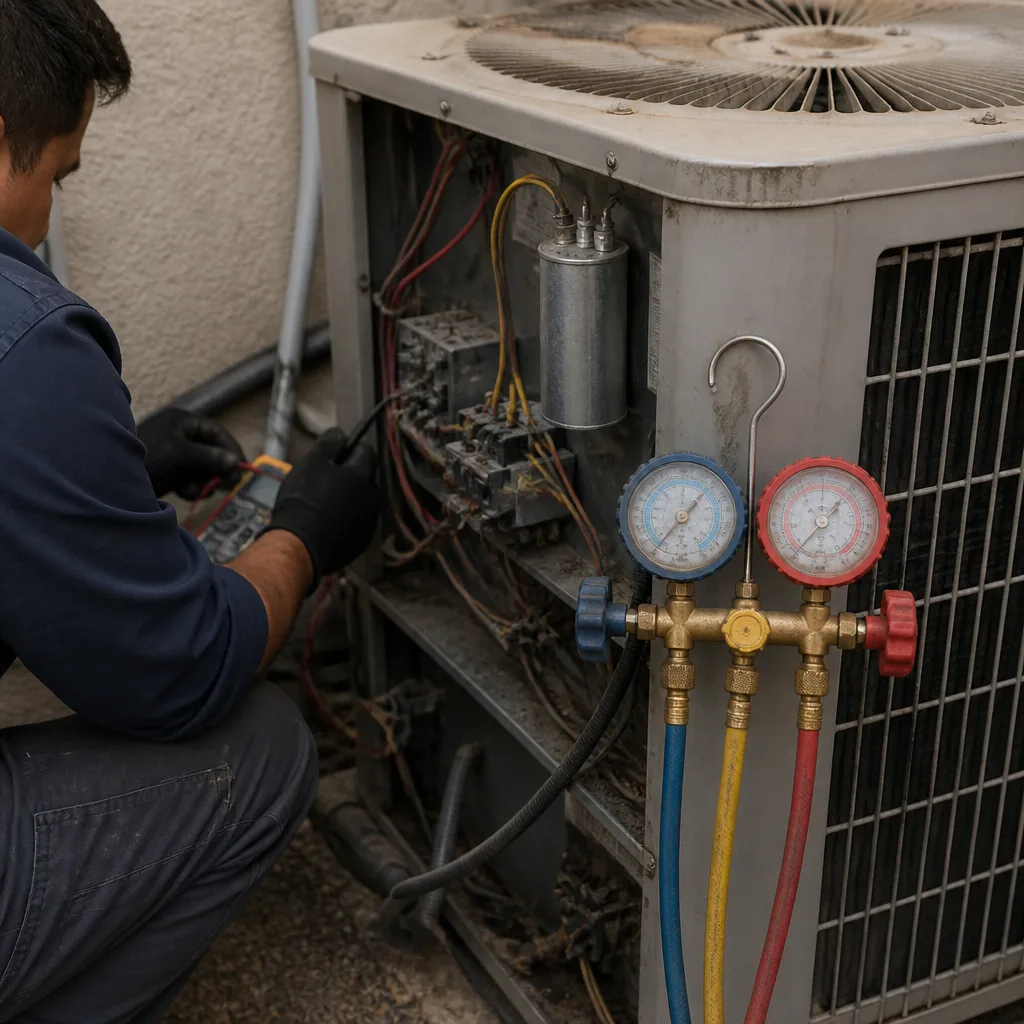
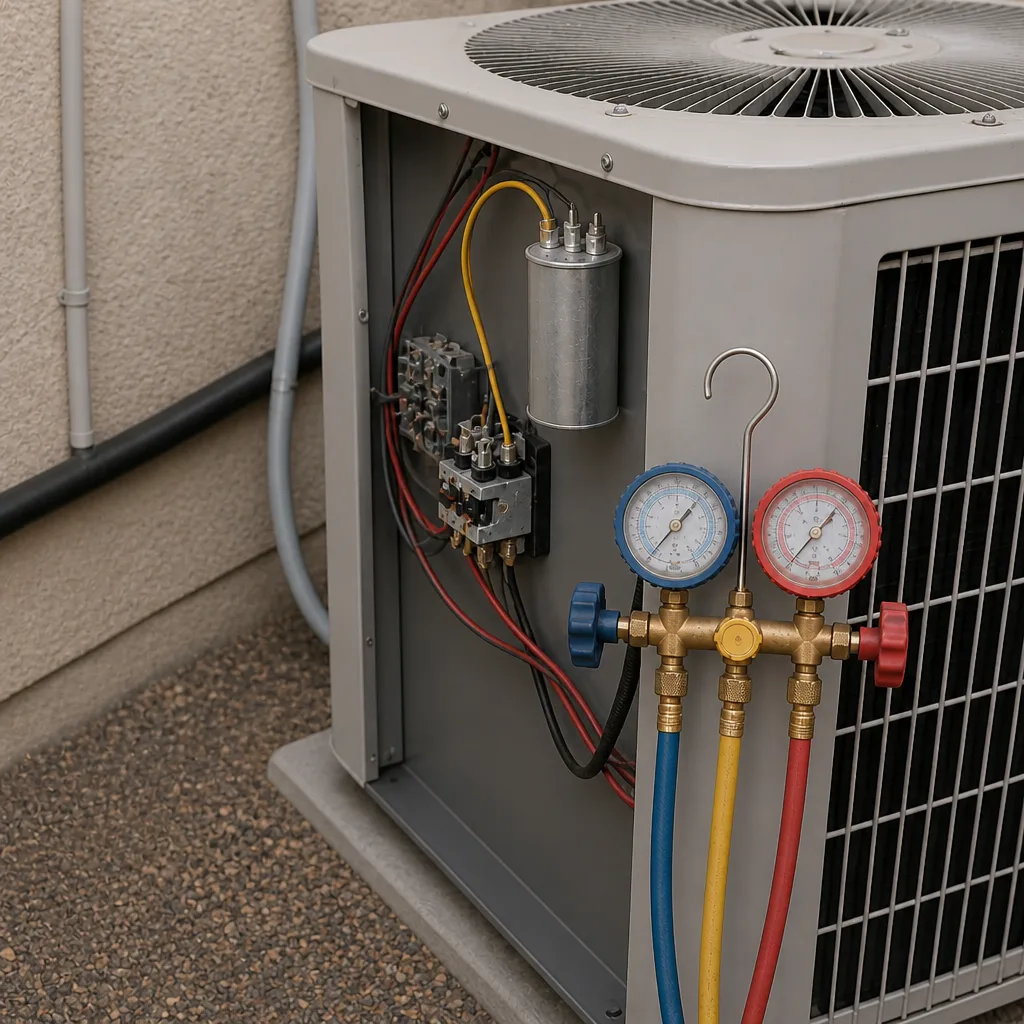
- Refrigerant charge. The system must be charged to the manufacturer’s specified subcooling or superheat, measured with gauges, not estimated by feel. An undercharged or overcharged system loses capacity and efficiency and shortens compressor life.
- Static pressure. Total external static pressure across the air handler confirms the duct system can deliver the airflow the equipment needs. High static pressure means the blower is fighting the ducts, which wastes energy and can freeze the coil.
- Thermostat calibration. The thermostat should be checked against a reference thermometer and set up for the home’s schedule and zoning if applicable.
- Condensate drainage. The drain line, pan, and float switch must be verified so water can’t back up into the attic or ceiling. In a dry climate this can get overlooked, but it still matters.
- Temperature split. The difference between return and supply air temperature confirms the system is actually cooling as designed.
- Filter and airflow. A clean filter and unobstructed return airflow should be confirmed before the job is signed off.
These are the checks that separate a well-commissioned system from one that just runs. If you want a replacement handled this way, AC Repair Sunrise Manor is the place to start. Our technicians have up to 10 years of experience, and we’ll tell you honestly whether repair or replacement makes more sense before we recommend anything.
Common Mistakes to Avoid
- Sizing by square footage alone. A rule-of-thumb formula ignores window orientation, insulation, and duct condition. In Sunrise Manor’s heat, that shortcut produces systems that fail early.
- Skipping the load calculation to save time. A contractor who doesn’t run Manual J is guessing at tonnage, and the guess will cost you.
- Ignoring the attic and ducts. Installing new equipment without addressing leaky ducts or thin attic insulation means paying for cooling that never reaches the rooms.
- Letting the contractor skip the Clark County permit. Unpermitted work can complicate a future sale and leaves no inspection record.
- Choosing equipment before calculating the load. The equipment should be selected to match the load, not the other way around.
- Skipping the post-install verification. No refrigerant charge check, no static pressure reading, no thermostat calibration: the system is a mystery box.
- Assuming the brand is the whole story. A well-installed Goodman will outperform a poorly installed premium unit every time.
See the difference
 Before
 After
 Before
 After
 Before
 After
When to Call a Professional
Some decisions are worth making on your own. An AC installation isn’t one of them. Call a professional if you’re replacing a system that’s more than a decade old, if your current unit struggles to keep up on the hottest days, if you’re getting quotes that don’t include a load calculation, or if you’re unsure whether your existing ducts and attic insulation are up to the job. Any of those situations is a sign that the next step needs a trained eye and the right tools. A contractor can walk through your home, run the calculation, and tell you what the system actually needs rather than what sounds easiest to sell. AC Repair Sunrise Manor offers free estimates in Sunrise Manor. Call (855) 356-3116. We answer 24/7. Fast dispatch from 7am to 7pm, Sunday through Friday.
Frequently Asked Questions
The price depends on system type, tonnage, and whether duct or insulation work is needed, and we don’t quote a number until we’ve run the load calculation and written an estimate. Call (855) 356-3116 for an exact quote; estimates are free.
Yes. A replacement is not a like-for-like swap if the original system was sized incorrectly or the house has changed (new windows, added insulation, new additions). In Sunrise Manor’s climate, getting the tonnage right is the difference between a system that lasts and one that cycles itself to an early failure.
Yes, replacement and new installation work generally requires a permit through the Clark County Building Department, and the installation must pass an inspection. Ask your contractor for the permit number before work begins.
It depends on the system’s age, the cost of the repair relative to replacement, and whether the equipment is the right size for the home. We’ll tell you honestly whether repair or replacement makes more sense. Call (855) 356-3116 and we’ll walk through it with you.
You can, but it only pays off if the load calculation and duct design support it. A variable-speed system in a home with undersized ducts will underperform its rating. Get the load and duct work evaluated first.
We answer 24/7, and we dispatch technicians Sunday through Friday from 7am to 7pm. For installation work, we’ll set a date after the estimate. Call (855) 356-3116 to get started.
The Bottom Line
A good AC installation in Sunrise Manor comes down to four things: a real Manual J load calculation, a system type matched to how the house actually runs in this climate, a permit pulled through Clark County, and a post-install verification that proves the system is charged and balanced correctly. Skip any of those, and the equipment becomes a guess. The brand matters less than the sizing and the installation. We work on nine major brands and we’ll tell you honestly whether repair or replacement makes more sense, because a single call that covers Carrier, Trane, Lennox, Goodman, Rheem, York, Daikin, Bryant, and American Standard shouldn’t also come with a pitch. For furnace repair or a full system replacement, the same approach applies year-round. Call (855) 356-3116 for a free estimate. We answer 24/7. Fast dispatch from 7am to 7pm, Sunday through Friday.
Written by the team at AC Repair Sunrise Manor.