
Last updated November 15, 2026
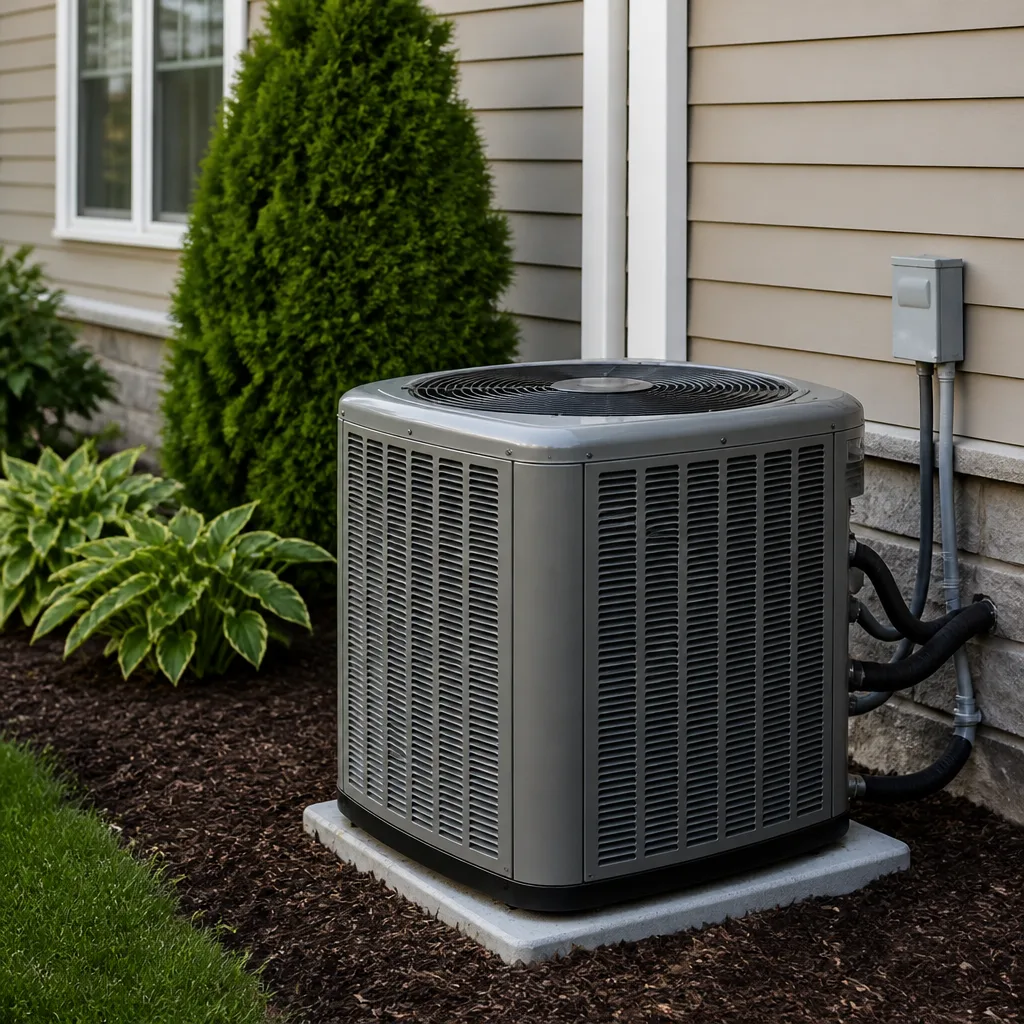 AC repair
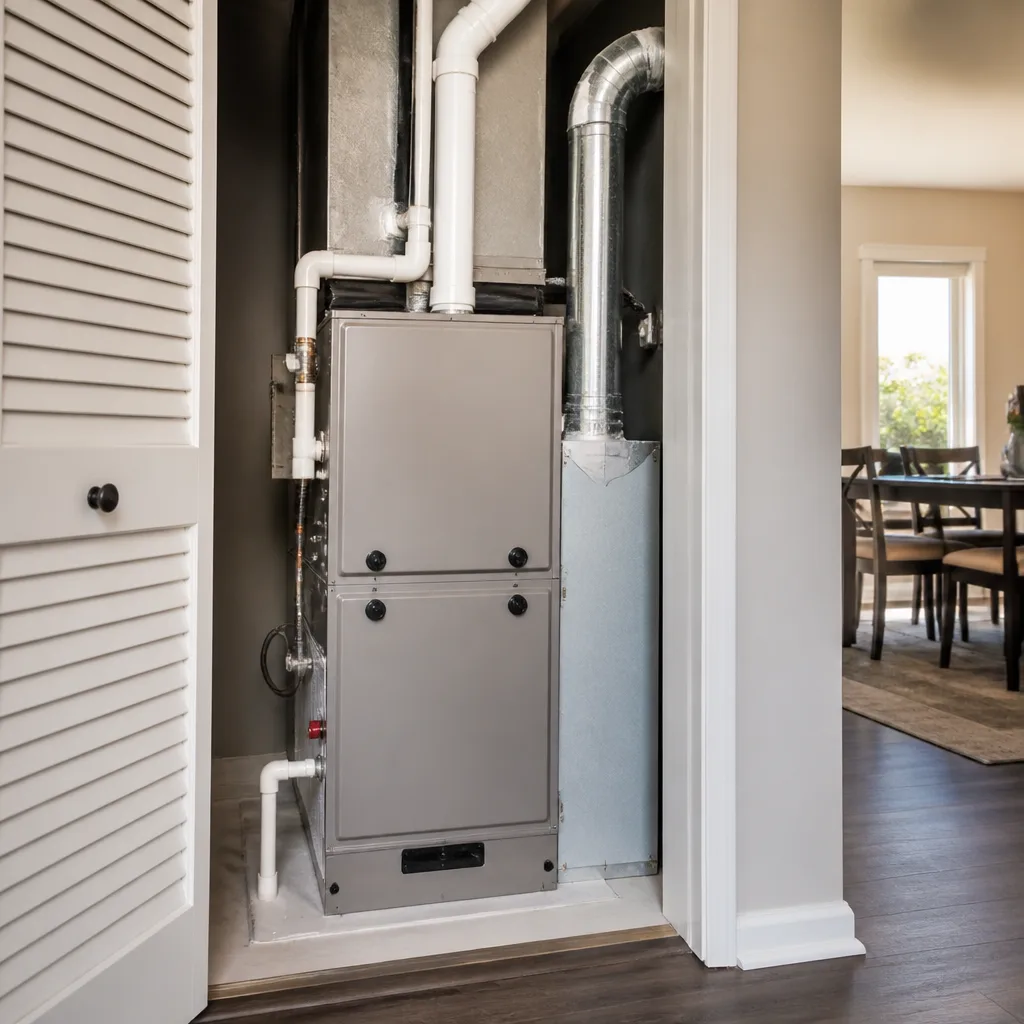 Furnace & heating
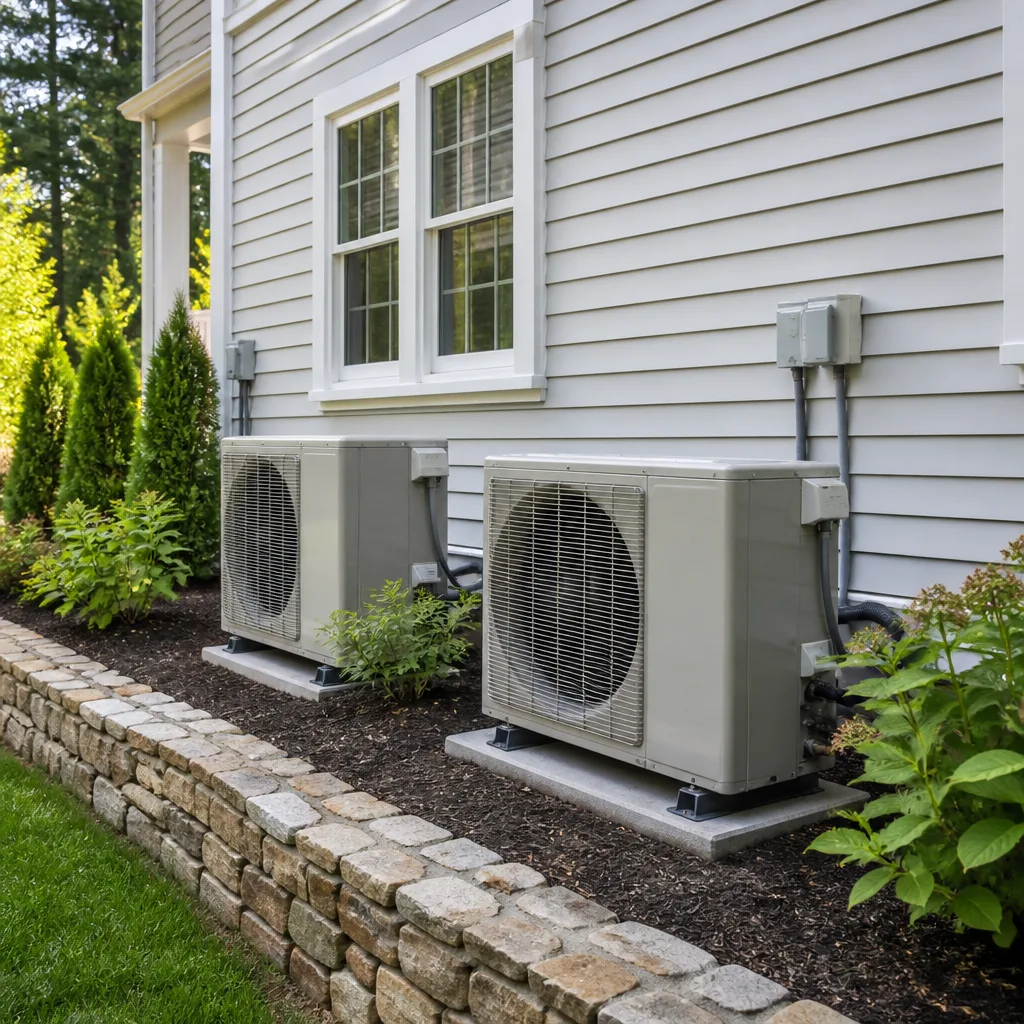 Heat pumps
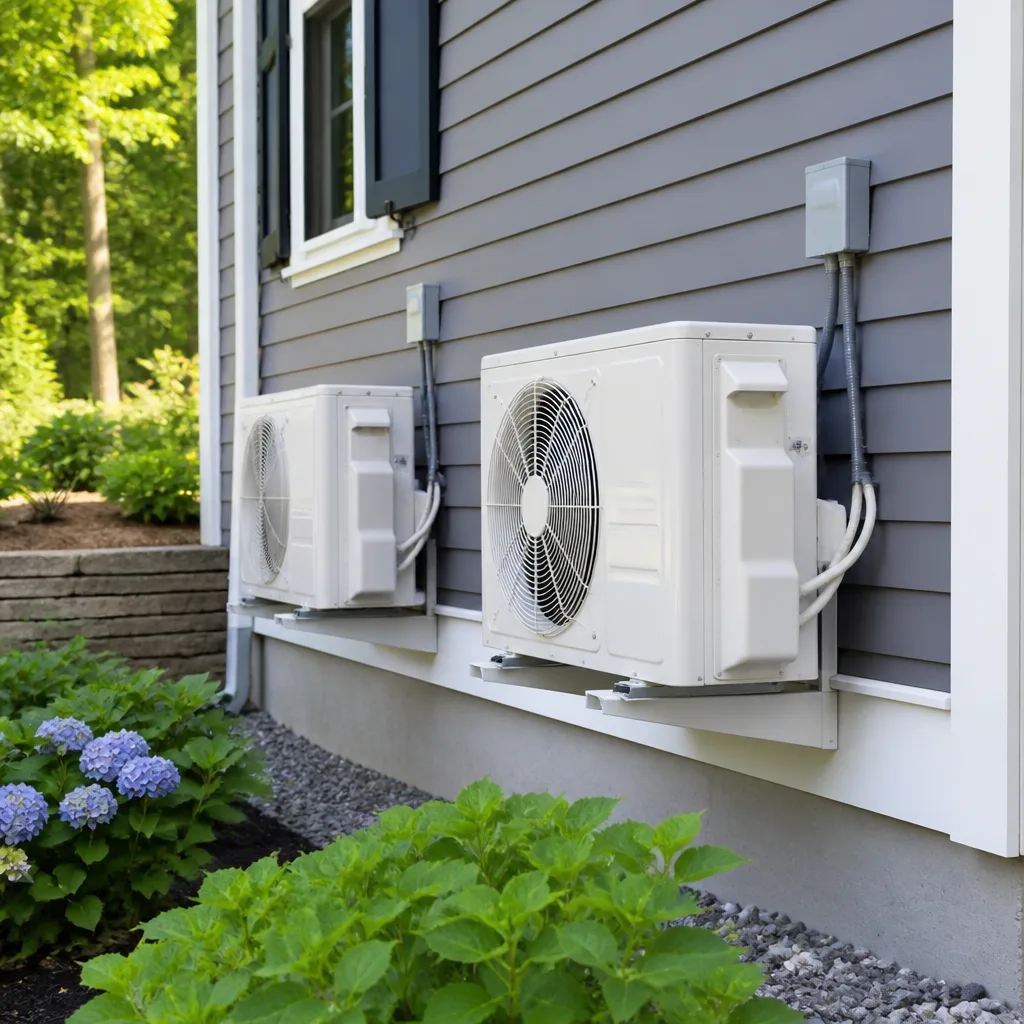 Ductless mini splits
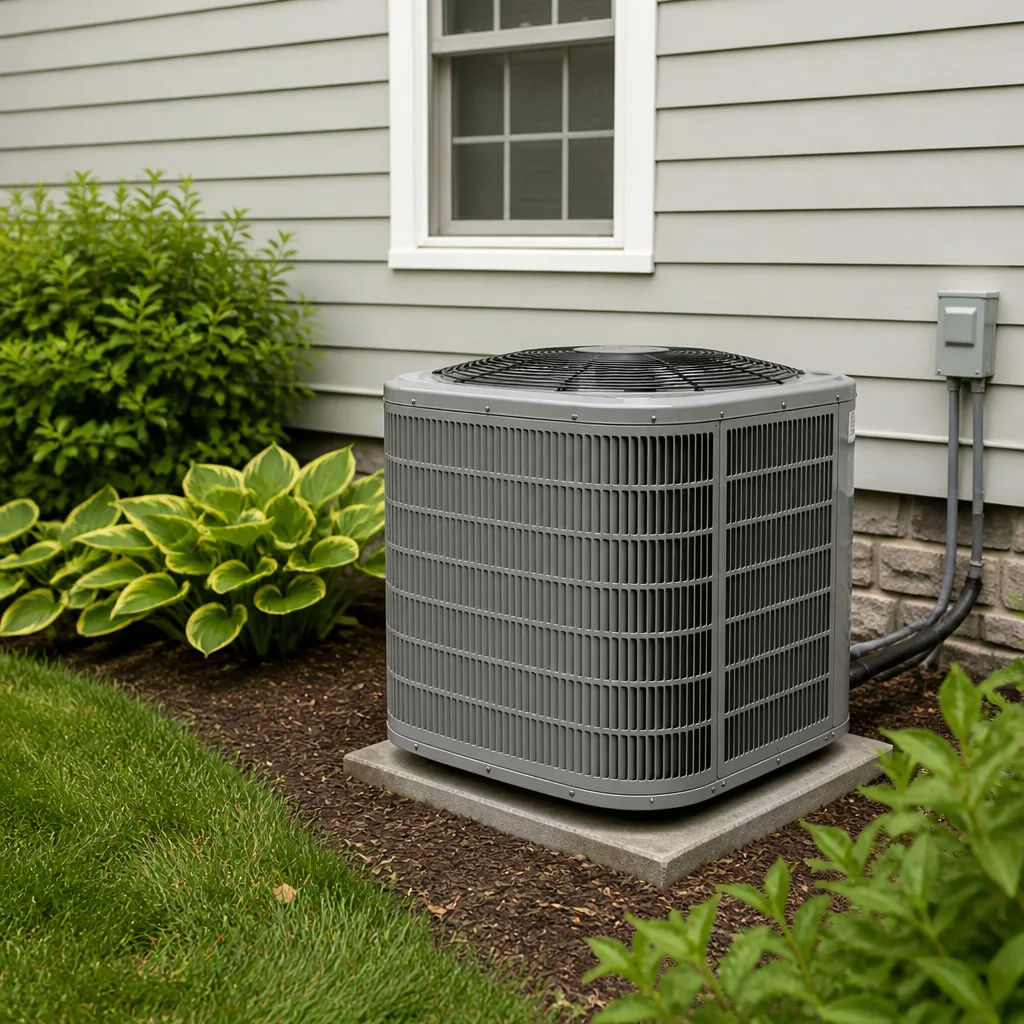 Carrier
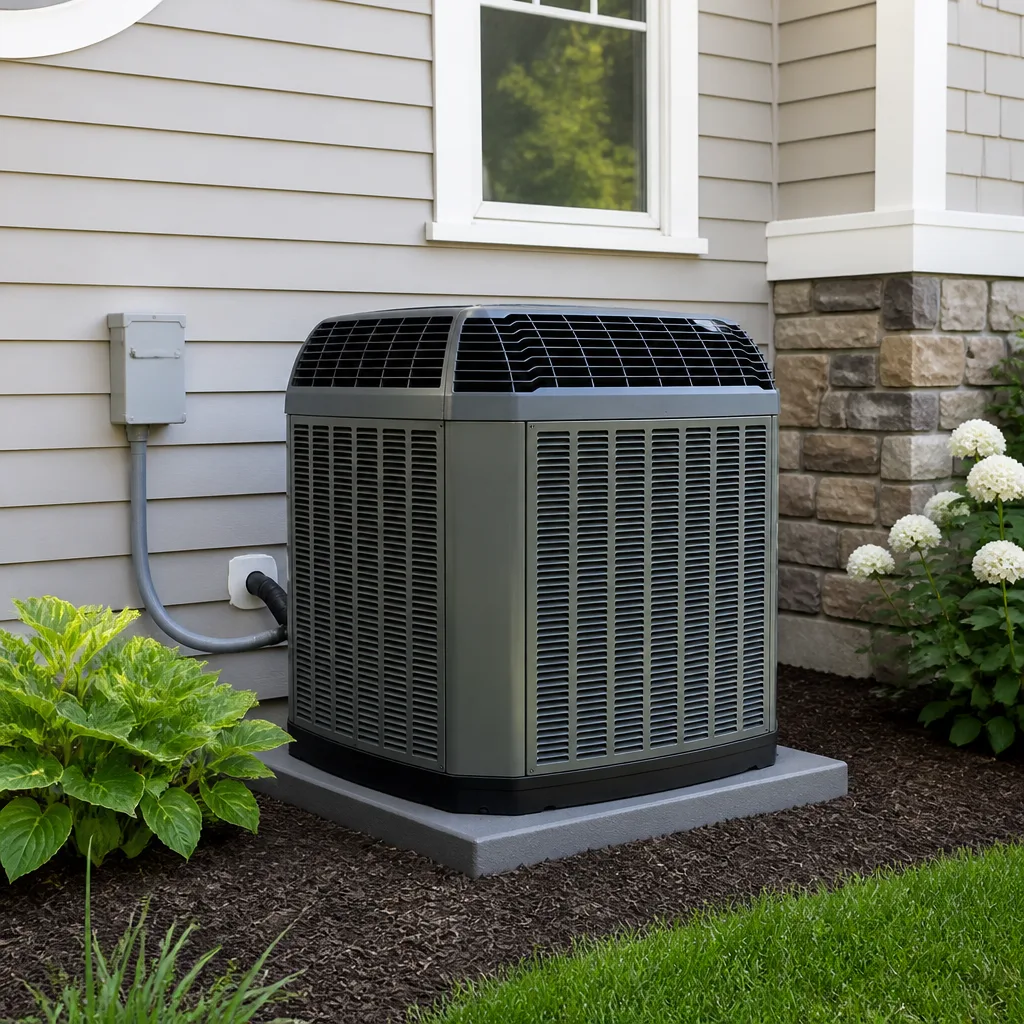 Trane
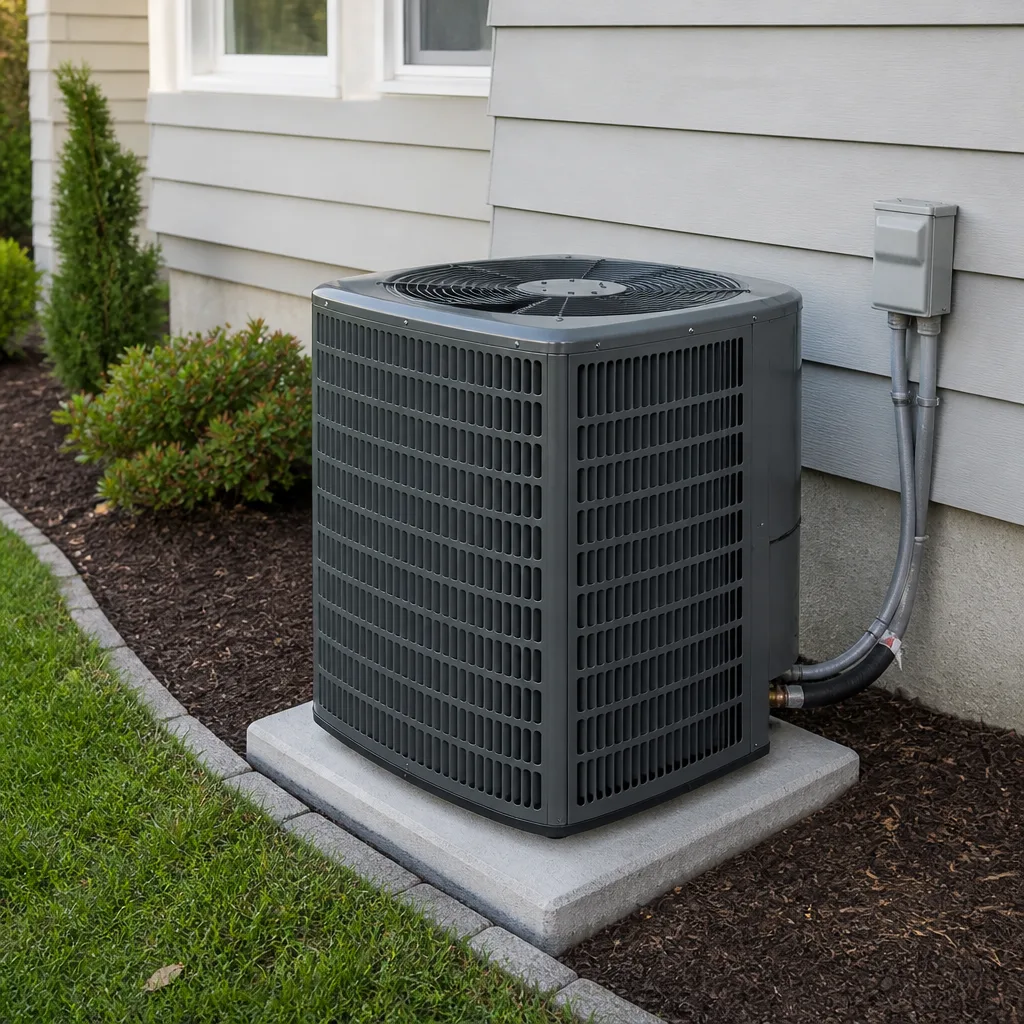 Goodman
Seasonal tune-up and full diagnostic on your Carrier, Trane, or Goodman system - readings shown to you before any repair is proposed
Diagnosis first, numbers second - you approve the repair price before a single part goes in.
Get your free estimateSeasonal HVAC Care for Sunrise Manor: Year-Round Homeowner’s Guide
Most homeowners treat HVAC care as a spring ritual. In Sunrise Manor, that habit backfires. Our hottest weeks land in June and July, and by the time the first 110°F afternoon arrives, the systems that needed attention had already been running flat out. October is honestly the best month to service your AC here: technicians have room in the schedule, parts are available, and you have months of breathing room before cooling matters again. Almost no one does it. This guide maps HVAC care to Sunrise Manor’s real climate calendar instead of a national template, covering cooling prep, summer operating strategy, fall coil work, and the short winter heating check most people skip.
Quick Answer
Seasonal HVAC care in Sunrise Manor follows a two-season-plus-shoulder calendar: inspect the cooling system in March before the first 95°F day, run smart setpoints and watch for short cycling from June through September, clean coils and drain lines in October after the cooling load lifts, and prep the heating side from November through February. The one task that never stops is condensate drain maintenance, because a system that also runs in heating mode keeps producing water year-round.
Styles & brands we work with
- AC repair
- Furnace & heating
- Heat pumps
- Ductless mini splits
- Carrier
- Trane
- Goodman
Table of Contents
- Why Sunrise Manor Needs Its Own HVAC Calendar
- March Pre-Season Checklist: Before the First 95°F Day
- June Through September: Operating Guidance for 110°F Days
- October Post-Season AC Tasks: Why Fall Beats Spring for Coil Cleaning
- November Through February: Heating System Prep
- The Year-Round Task: Condensate Drain Maintenance
- Repair or Replace? Reading Your System’s Signals
- What System Do You Actually Have?
Why Sunrise Manor Needs Its Own HVAC Calendar
Sunrise Manor doesn’t get four symmetrical seasons. It gets a long, punishing cooling run, a genuine shoulder season where both systems earn their keep, and a short mild winter that’s easy to ignore. That shape changes everything about how you maintain equipment here.
Think about what your system actually experiences. From roughly late spring through early fall, the AC runs near continuously. Desert dust loads the outdoor coil faster than humidity would in a wetter climate, because there’s no rain to wash it off. Then, in a matter of weeks, the load drops and some systems switch over to heating mode. That handoff is where a lot of preventable failures happen, because the shoulders are when nobody’s paying attention.
Most national maintenance checklists assume a furnace-heavy winter and a mild summer. In Sunrise Manor that’s backwards. Your cooling equipment is the workhorse, and your heating equipment gets a short but real workout every winter, particularly on the cold mornings when a heat pump is running in reverse. If you own a heat pump, you’re running the same outdoor unit year-round, which is exactly why the condensate drain matters even in January.
So the calendar here is different. Cooling prep belongs in March. Operating discipline belongs in the summer. Fall is for the coil cleaning and the post-season inspection that most homeowners never schedule. Winter is for heat pump and gas furnace checks. Everything else is common sense layered on top.
March Pre-Season Checklist: Before the First 95°F Day
The single most useful thing you can do in March is get eyes on the system before you need it. That means scheduling an inspection before the first hot weekend fills every technician’s calendar. If your AC fails on a 100°F Tuesday in June, you’re in a queue. If it fails in March, you have time to fix it without stress.
Here’s what a thorough pre-season inspection should cover, whether you do the visual parts yourself or bring in a professional:
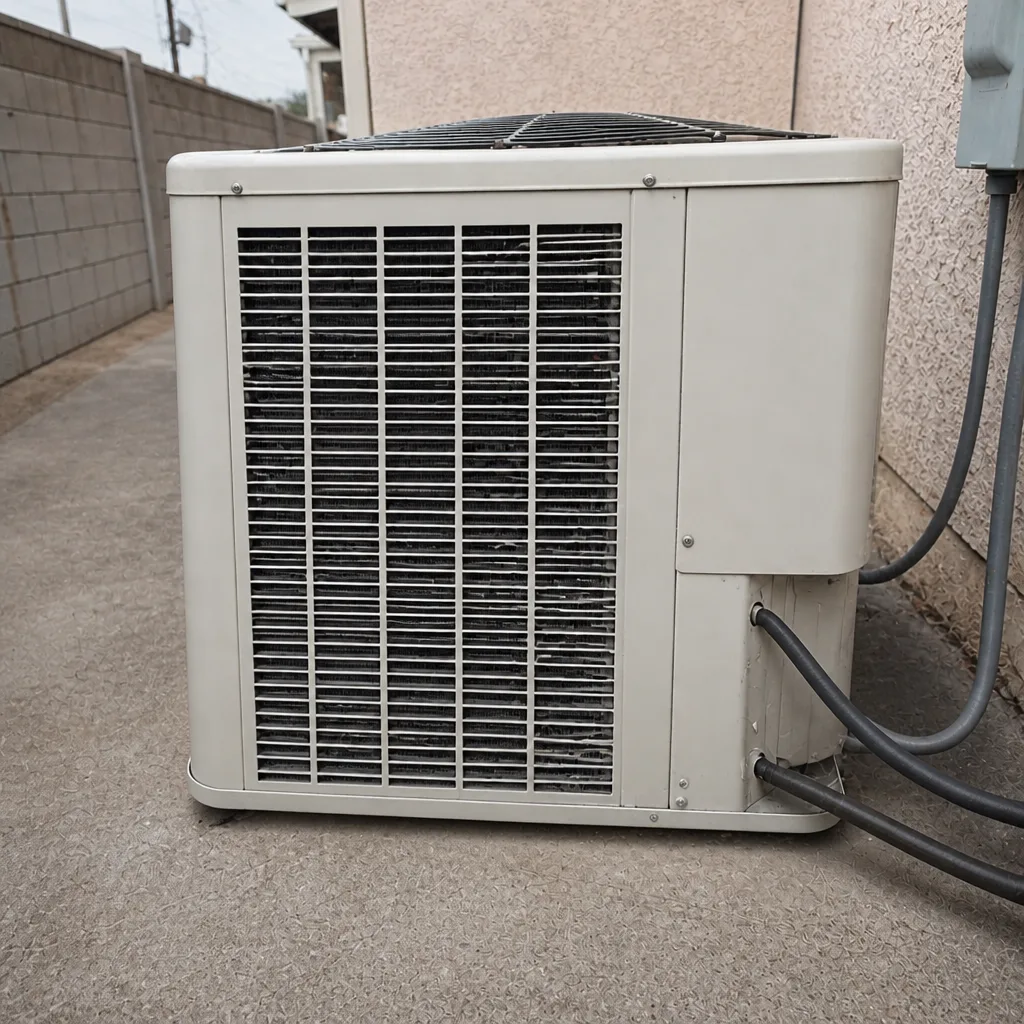
- Outdoor coil cleaning. In a high-dust environment, the outdoor coil collects a film of dust and debris that quietly reduces capacity. Rinse it off with a garden hose, no pressure washer, and clear plant growth and stored items away from the unit.
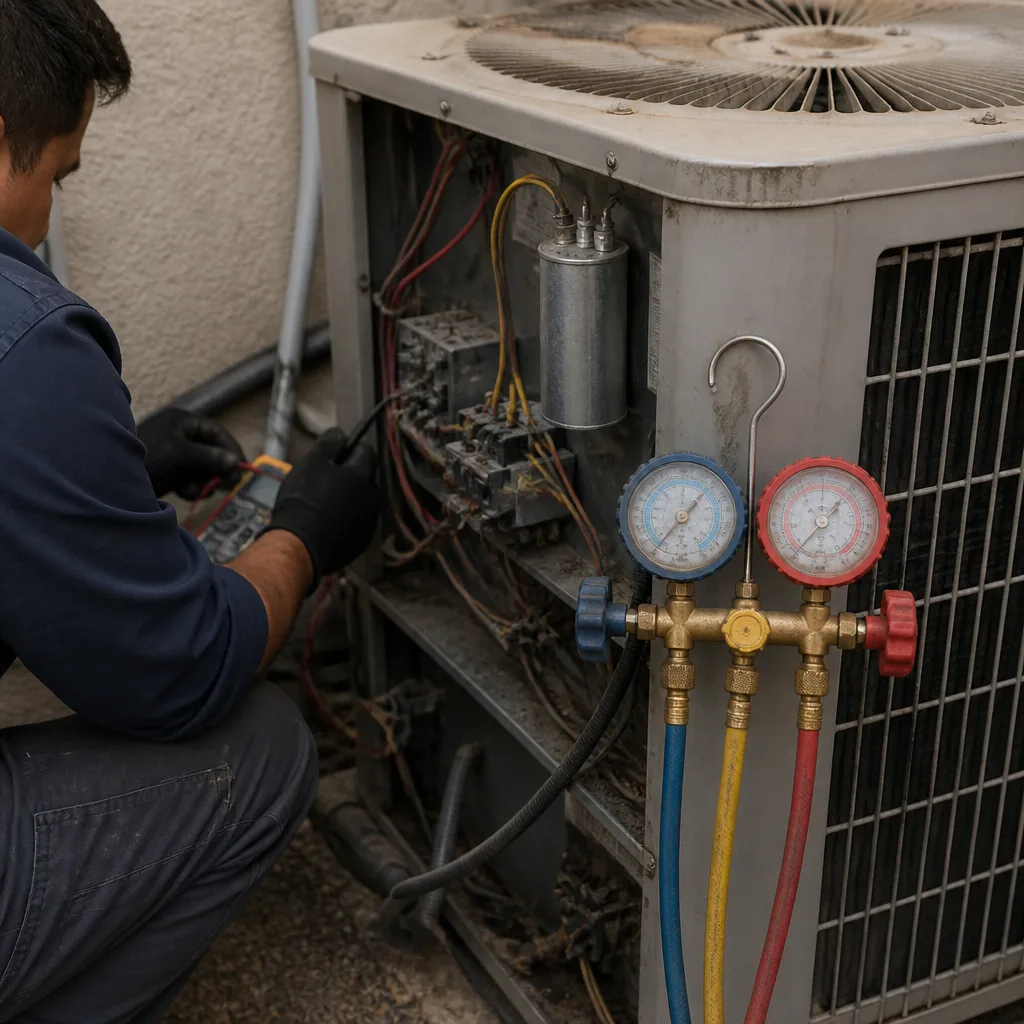
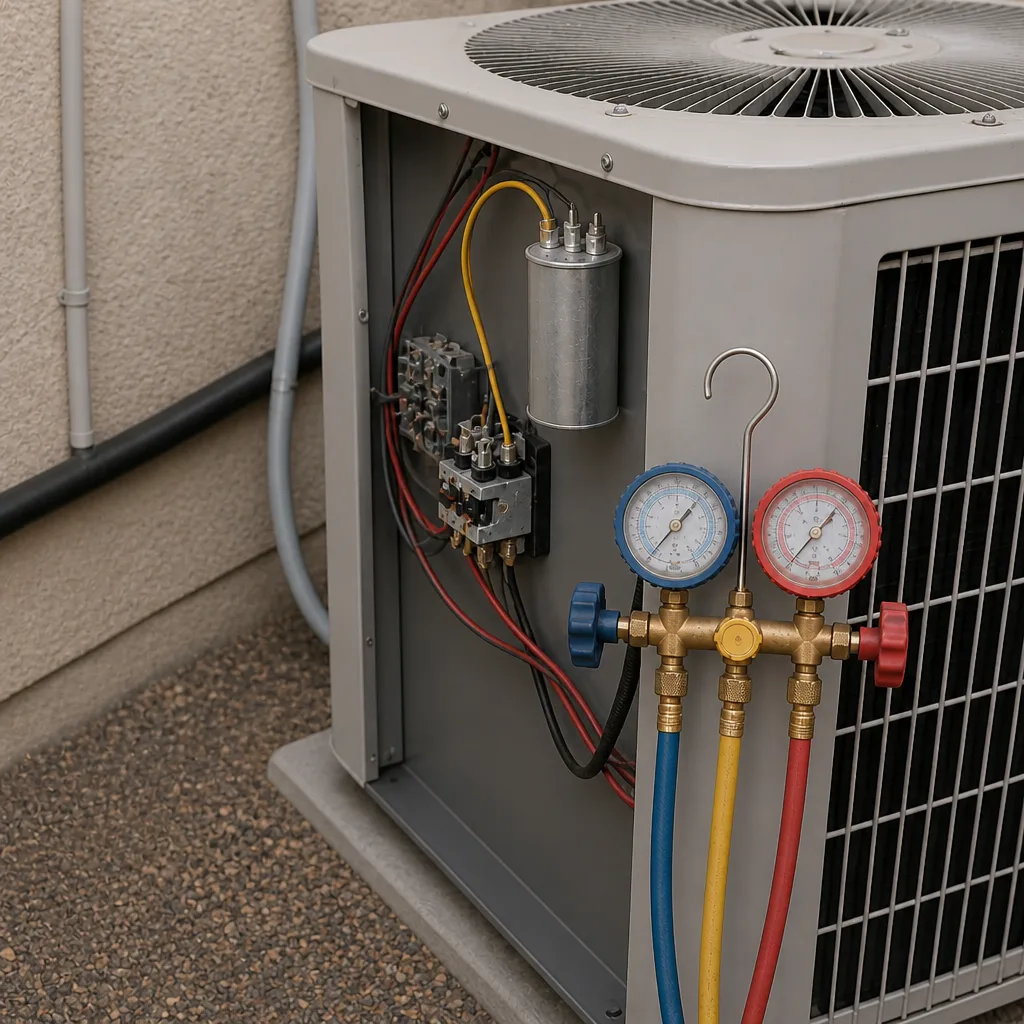
- Refrigerant pressure check. This is a professional task. Low pressure usually means a leak, not just a top-off, and adding refrigerant to a leaking system is a temporary patch. A technician confirms pressures against the manufacturer’s spec.
- Capacitor inspection. Start and run capacitors are among the most common early-summer failure points in desert systems, because the compressor starts hard in high ambient heat. A technician can test capacitance with a meter and replace a failing capacitor before it strands you.
- Filter replacement. A clogged filter does more damage here than in milder climates, because the system runs longer and pulls harder. Check it monthly once cooling season starts.
- Outdoor disconnect and wiring check. Loose connections at the disconnect are a common nuisance failure. Leave the electrical work to a technician.
If any of that turns up a part that’s already worn, March is when you want to know. For more on what a service visit looks like, see our AC Repair Sunrise Manor overview. And if the system is genuinely at end of life, this is also the right month to price out AC installation, so you’re not choosing a system in a heatwave panic.
A note on safety: capacitors hold a charge even after power is off, and the outdoor disconnect may still be live. Testing or replacing one is a job for a trained technician, not a homeowner with a screwdriver.
June Through September: Operating Guidance for 110°F Days
Once the heat is on, most of what keeps your system alive is how you run it, not what you fix. Two habits matter most: setpoint discipline and knowing the difference between normal operation and a problem that’s about to become a failure.
Setpoint strategy for 110°F-plus days: keep the thermostat steady. Bumping the setpoint up when you leave and back down when you return forces the compressor to work hard right at the worst time of day. A steady setpoint lets the system find its rhythm. Programmable and smart thermostats are fine; just don’t treat the schedule as an excuse to swing the temperature wildly. If your system is a heat pump, it may also have an auxiliary heat stage, and nudging the thermostat quickly can trip it on unnecessarily. Keep the setpoint stable and the auxiliary heat stays where it belongs.
Now the sounds. A normally operating system cycles on and off at intervals, and on a 110°F day it may run nearly continuously with brief rest periods. That’s expected. What’s not expected:
- Short cycling. The compressor kicks on, runs for less than a couple of minutes, and shuts off again, over and over. That pattern points to a refrigerant charge issue, a failing capacitor, or a thermostat problem. Call a technician; short cycling wears out a compressor fast.
- Clicking at the outdoor unit without starting. Often a capacitor or contactor. Don’t keep resetting it hoping it catches.
- Ice on the indoor or outdoor coil. Counterintuitive in desert heat, but it usually means restricted airflow or low refrigerant. Turn the system off and call.
- Water pooling near the indoor unit. The condensate line is clogged. Shut the system down before it backs up into the cabinet.
When to call versus wait: if the system is cooling and running normally, run it. If it’s short cycling, icing, leaking water, or your house can’t reach the setpoint on a hot afternoon, that’s a call. Our furnace repair team also handles the shoulder-season heating call, so a single phone number covers both directions.
Need a technician today during cooling season? We answer 24/7. Fast dispatch from 7am to 7pm, Sunday through Friday.
October Post-Season AC Tasks: Why Fall Beats Spring for Coil Cleaning
Here’s the counterintuitive one. In a high-dust environment, the best time to clean your coils is fall, not spring. By October, the coil has just spent a full cooling season collecting dust, and cleaning it in the fall means it sits clean through the mild months and starts the next season at full efficiency. Clean it in spring instead and you’re cleaning off what accumulated last summer anyway, while the first hot weeks already stress the system.
October work also happens when technicians have bandwidth. Summer is behind them and the heating rush hasn’t started. It’s the single best month on the calendar to book a service visit in Sunrise Manor.
What a proper post-season AC inspection covers:
- Indoor and outdoor coil cleaning. This should be done with the right coil cleaner, not a pressure washer, which can bend fins. A technician confirms both coils are clear and the airflow path is unobstructed.
- Refrigerant pressure check. Pressures should still be in spec after a full season. If they’ve drifted, a leak is present, and it’s better to know now than in July.
- Condensate drain flush. More on this below, but the fall flush clears the biofilm and dust that builds up during a running season.
- Electrical check. Contactors and capacitors get a hard workout during summer. Fall is when a marginal contactor gets replaced on your schedule instead of failing mid-July.
- Filter and ductwork visual. Swap the filter, and have the technician note anything unusual in the visible duct runs or returns.
If the fall inspection turns up something the system can’t reasonably recover from, that’s the moment to talk about replacement, not next June. For homes in Sunrise Manor, October is when an honest repair-versus-replace conversation is most useful, because there’s time to plan the install.
November Through February: Heating System Prep
Winter in Sunrise Manor is short and mild, which makes it easy to skip. Don’t. Cold mornings are common enough that a heating system that hasn’t been checked in a year will find a way to remind you, usually at the worst moment.
What to check depends on what you own. If you have a heat pump, the reversing valve is the part most likely to give you trouble, and it’s the part most homeowners have never heard of. The reversing valve switches the system between cooling and heating, and a sticking valve can produce a system that cools fine but won’t heat, or that heats poorly. A technician confirms the valve switches cleanly and the defrost cycle behaves. It’s a quick check on a service call and worth doing before the first cold snap.
If you have a gas furnace, the priority is a visual inspection of the heat exchanger. A cracked heat exchanger is a serious safety concern because it can let combustion gases into the living space. The inspection is visual and non-invasive, and it’s exactly the kind of thing to have done before the furnace runs all winter. If any symptom suggests a problem, a technician will confirm with a more thorough test. For a dedicated walk-through, our furnace repair page covers what a proper furnace check should include.
Carbon monoxide detector placement matters more than people think, and Sunrise Manor’s common single-story and split-level floor plans change the right answer. Put a detector on every level of the home, outside each sleeping area, and in the same room as any fuel-burning appliance if the layout allows. Do not put one in the garage; place it just inside the door from the garage to the house, so a vehicle left running can trigger the alarm. Test detectors at the start of every heating season.
If your heating system is on its last legs, we handle furnace repair and replacement with the same team, so you get one honest recommendation and one estimate.
The Year-Round Task: Condensate Drain Maintenance
This is the task that surprises people. Condensate drains are obvious in summer, when the AC is pulling moisture out of the air and dripping it away. In Sunrise Manor, they matter in winter too, because a heat pump produces condensate in heating mode. A drain that clogs in January backs water up into the indoor cabinet and can cause damage or an emergency shutoff. That makes drain maintenance a year-round habit, not a summer task.
What to do:
- Find the drain line. It runs from the indoor air handler to a drain, usually outside the house or to a floor drain. Trace it once and know where it goes.
- Check the drain pan. Rust, standing water, or visible algae means the drain or the line needs cleaning. The pan should be dry under normal operation.
- Flush the line. A technician flushes the primary drain with a drain-cleaning solution and confirms the line flows freely. This is a normal part of any service visit.
- Know the safety switch. Most modern systems have a float switch that shuts the unit off if the pan fills. If your system shuts down on a hot day with no obvious failure, this switch is a first suspect.
- Watch for float switch trips. A trip means the drain is clogged, and it’s your signal to call before water finds the wrong place.
Because Sunrise Manor’s systems run so many hours per year, drains here clog faster than in milder climates. Add a drain flush to both your fall AC inspection and your winter heating check, and you’ve solved a genuine year-round failure point.
Repair or Replace? Reading Your System’s Signals
This is the decision homeowners ask about most, and there’s no single right answer. What we can say is that the decision should be driven by the system, its history, and your budget, not by a manufacturer partnership. We work on nine major brands, so we have no reason to steer you toward one or away from another.
Signals that repair usually makes sense:
- The system is otherwise healthy and the failure is a single component like a capacitor, contactor, or blower motor.
- Refrigerant pressures are still in spec and there’s no leak history.
- The unit is a recent install and still young for its class.
Signals that replacement is worth pricing seriously:
- Repeated refrigerant leaks, especially on an older system.
- Compressor failure, which is often the most expensive single repair on the system.
- A heat exchanger that fails inspection on a gas furnace, which is a safety-driven replacement.
- Rising electricity bills that track to longer runtimes, not to rate increases.
When replacement is on the table, we handle both the AC and heating sides. If your cooling equipment is the candidate, our AC installation page covers the process. If it’s the heating equipment, we handle furnace replacement with the same team.
For a free estimate on either path, call (855) 356-3116. We’ll tell you honestly whether repair or replacement makes more sense.
What System Do You Actually Have?
Many homeowners in Sunrise Manor don’t know the brand of the equipment on the side of their house. That’s fine, because we don’t need you to know before you call. Our technicians are certified to work on nine of the industry’s leading brands, which means a single call covers whatever is installed in your home. That includes Carrier, Trane, Lennox, Goodman, Rheem, York, Daikin, Bryant, and American Standard.
The model and serial plate on the outdoor unit and on the indoor air handler tells the story. Take a photo of both plates, and the technician can confirm the brand, the model, and the likely age of the equipment before the visit. In a multi-brand household with a Daikin heat pump or a Bryant furnace, you don’t need to track down a brand-specific dealer. We work on whatever’s already installed.
Our technicians have up to 10 years of experience across both cooling and heating equipment, which is why the shoulder season advice in this guide holds up whether you own a York split system or an American Standard furnace. Whatever system you have, we work on it.
Common Mistakes to Avoid
- Skipping the March inspection. Scheduling the pre-season check in March means you’re not competing for a technician’s time in June. Homeowners who wait until the first hot weekend find themselves in a queue.
- Cleaning coils in spring instead of fall. In a high-dust environment, the coil collects its worst load during the summer. Cleaning in fall means it starts the next season clean; cleaning in spring means you’re just getting to what already built up.
- Bumping the thermostat hard on 110°F days. Swinging the setpoint forces the compressor to work right at the worst time of day. Keep it steady and let the system find its rhythm.
- Ignoring short cycling. A compressor that runs for two minutes and shuts off, on repeat, is telling you something. Catching that pattern early prevents a compressor failure later.
- Skipping the winter heat pump check. A reversing valve that sticks in heating mode produces a system that won’t heat. In a mild winter, that failure is easy to put off, and easy to prevent.
- Placing a carbon monoxide detector in the garage. A detector belongs inside the home, on every level and outside each sleeping area, and can also go just inside the door from the garage. The garage itself is the wrong room.
- Never flushing the condensate drain. A drain that clogs in January can shut down the system in heating mode, which surprises people who think of drain maintenance as a summer task. Flush it in fall and winter.
See the difference
 Before
 After
 Before
 After
 Before
 After
When to Call a Professional
Call a professional when the system short cycles, ices up, leaks water, or can’t hold a setpoint on a hot afternoon; those point to refrigerant, capacitor, or drain problems a homeowner can’t safely diagnose. Call when a heat pump won’t switch to heating, when a gas furnace gives you any reason to suspect the heat exchanger, or when you smell gas. Call before cooling season in March for the pre-season inspection, and before heating season in November for the winter check, so you’re not scheduling in a rush. And call when you’re unsure whether to repair or replace; that conversation is worth having with a technician who sees the actual equipment. If any of these sound like your situation, call (855) 356-3116. We answer 24/7. Fast dispatch from 7am to 7pm, Sunday through Friday. AC Repair Sunrise Manor offers free estimates in Sunrise Manor.
Frequently Asked Questions
March is the best month for the pre-season inspection, and October is the best month for the post-season service. March gets you ahead of the first 95°F day, and October lets you clean coils after a full cooling season while technicians have room in the schedule. Call (855) 356-3116 for an exact quote; estimates are free.
Short cycling is when the compressor starts, runs for only a minute or two, and shuts off, over and over. It matters more in Sunrise Manor because desert systems start hardest in high ambient heat and a failing capacitor or low refrigerant charge will wear out a compressor fast. If you hear that pattern, call rather than wait.
Fall. Your coil collects dust all summer, and cleaning it in October means it sits clean through the mild months and starts the next season at full efficiency. Cleaning in spring means you’re just getting to the buildup from the previous summer, when the first hot weeks already stress the system.
A failing reversing valve often shows up as a system that cools fine but won’t heat, or that heats poorly, especially on cold mornings. A technician confirms the valve switches cleanly and the defrost cycle behaves. The check is quick and worth doing in November before the first cold snap.
On every level, outside each sleeping area, and in the same room as any fuel-burning appliance if the layout allows. Do not put one in the garage; place one just inside the door from the garage to the house, so a vehicle left running can trigger the alarm. Test detectors at the start of every heating season.
At least twice a year, at the fall AC inspection and the winter heating check, and immediately if you see standing water in the pan or the system shuts down for no obvious reason. A heat pump produces condensate in heating mode too, so drain maintenance is a year-round task in Sunrise Manor, not a summer one.
The Bottom Line
Sunrise Manor doesn’t reward a national-template approach to HVAC care. The cooling system needs its check in March, its operating discipline in June through September, and its coil cleaning in October. The heating system deserves a real check from November through February, whether that’s a reversing valve test on a heat pump or a heat exchanger visual on a gas furnace. The condensate drain gets flushed twice, because it runs year-round. Keep that calendar and most failures become scheduled maintenance instead of emergencies. Whatever system you have, we work on it, and we’ll tell you honestly whether repair or replacement makes more sense.
Need a technician for any of this? Call (855) 356-3116 for a free estimate. We answer 24/7. Fast dispatch from 7am to 7pm, Sunday through Friday. Serving Sunrise Manor homeowners, one system at a time.
Written by the team at AC Repair Sunrise Manor.