
Last updated November 15, 2026
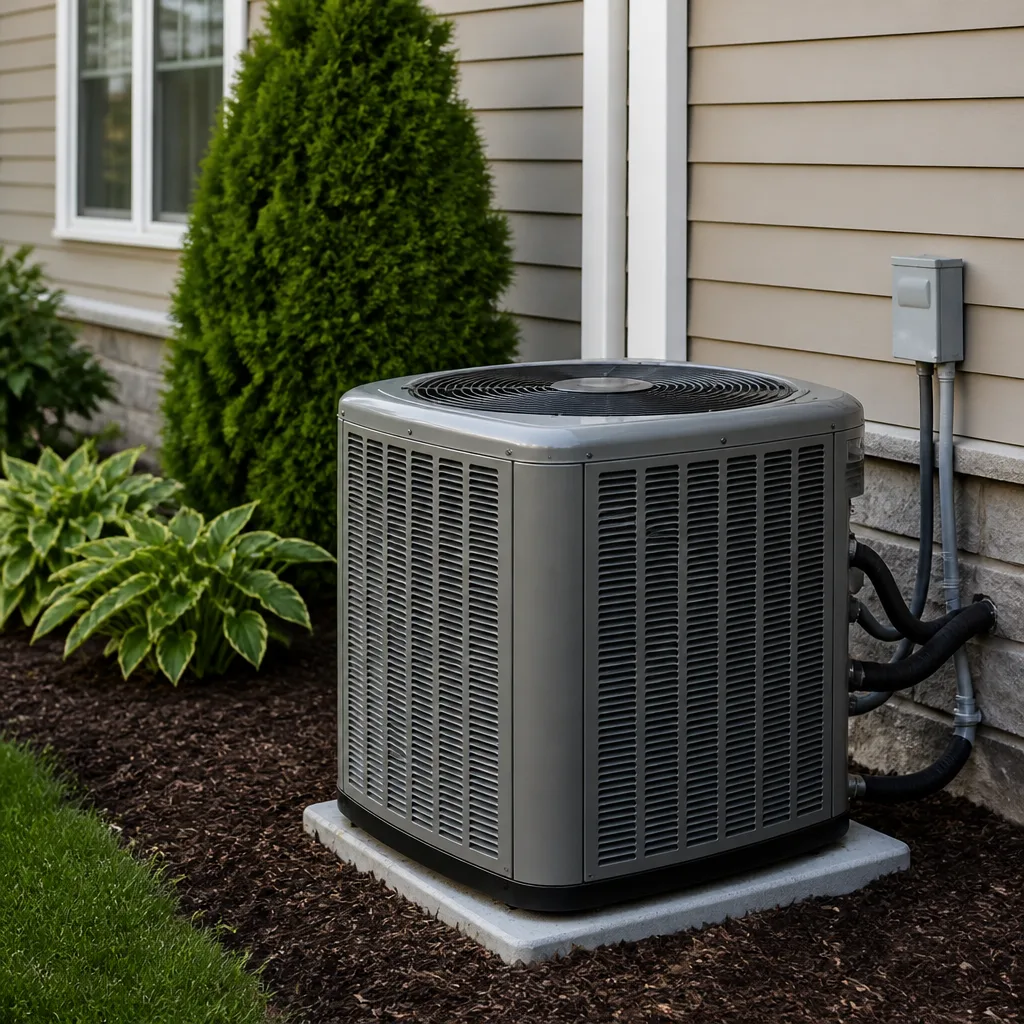 AC repair
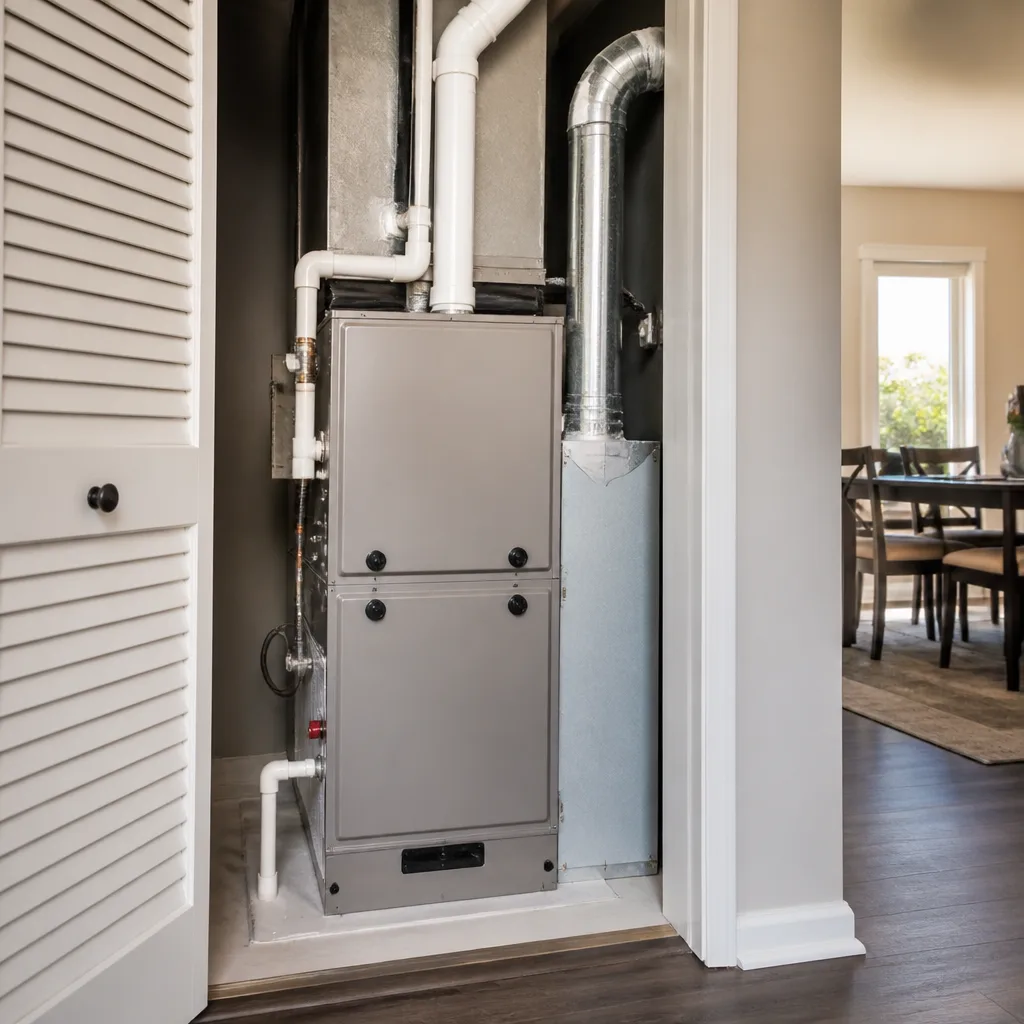 Furnace & heating
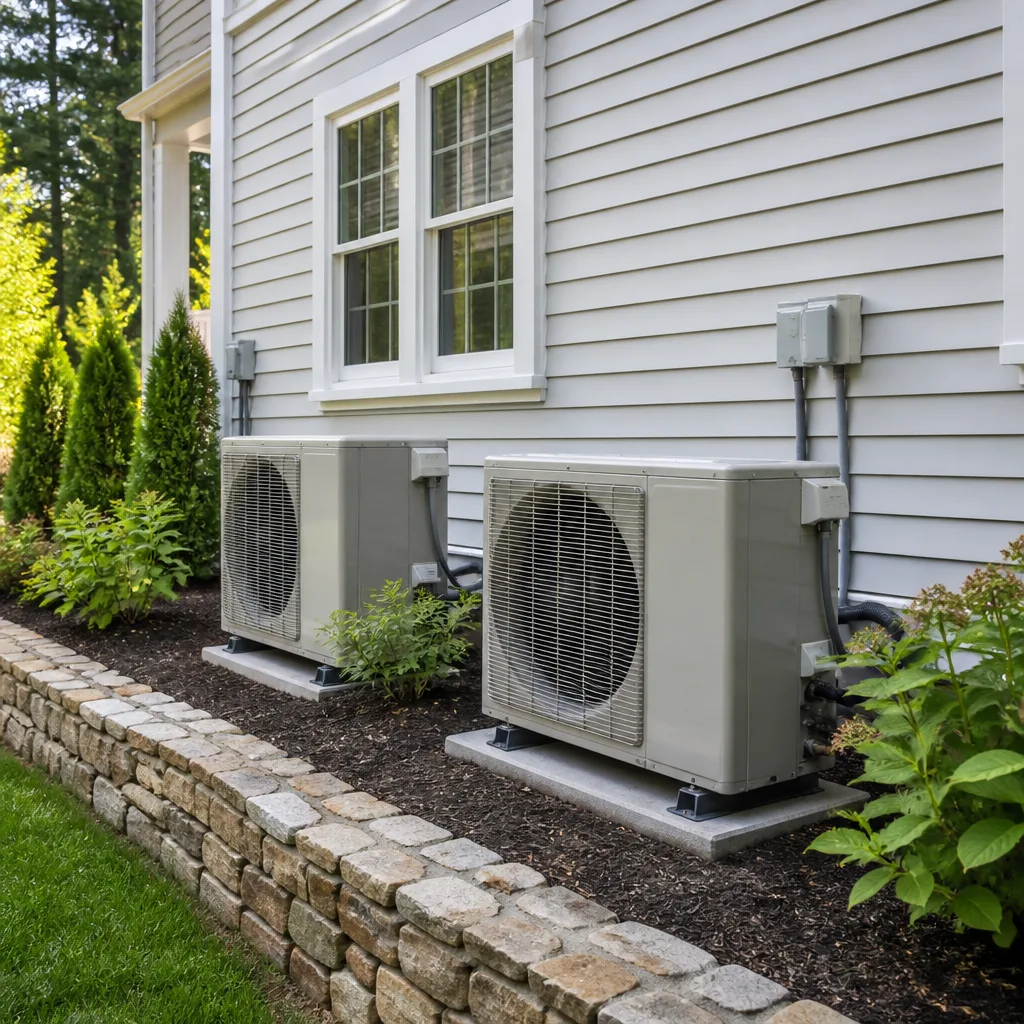 Heat pumps
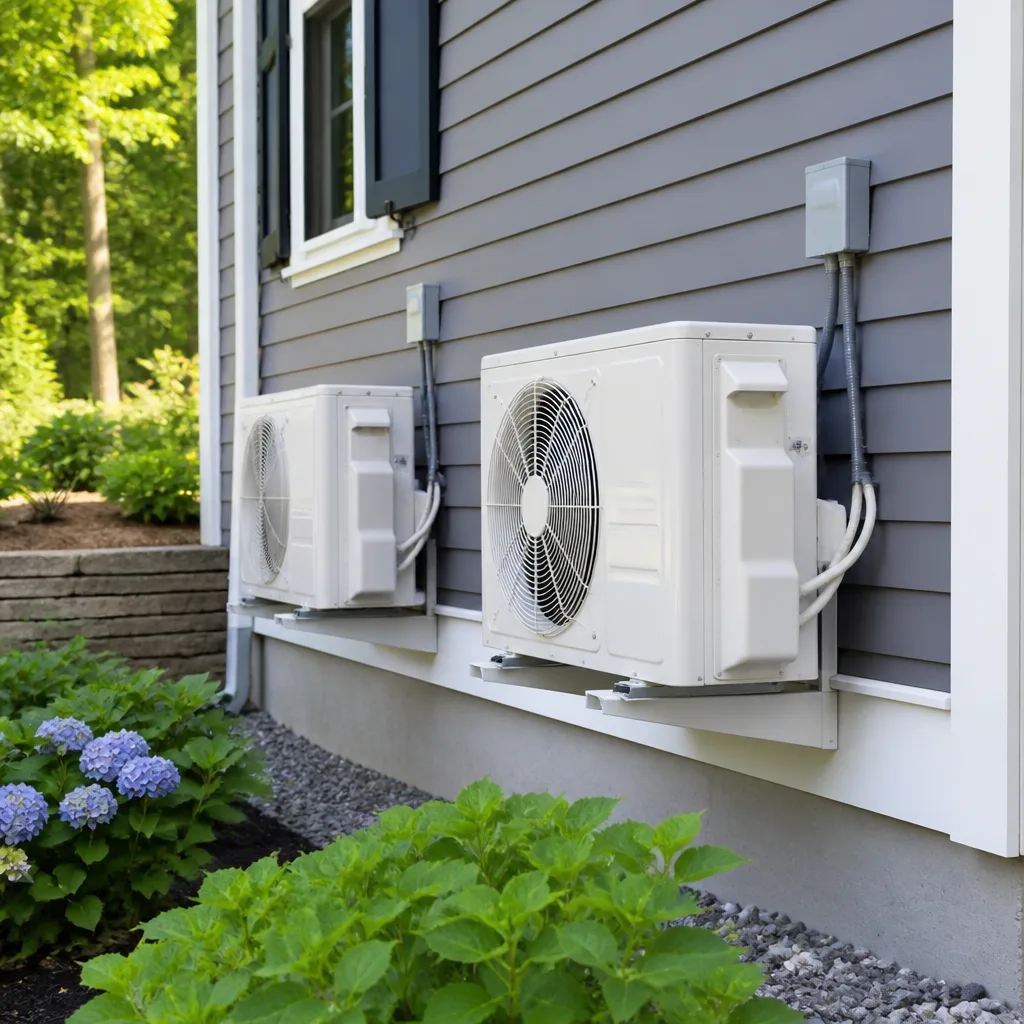 Ductless mini splits
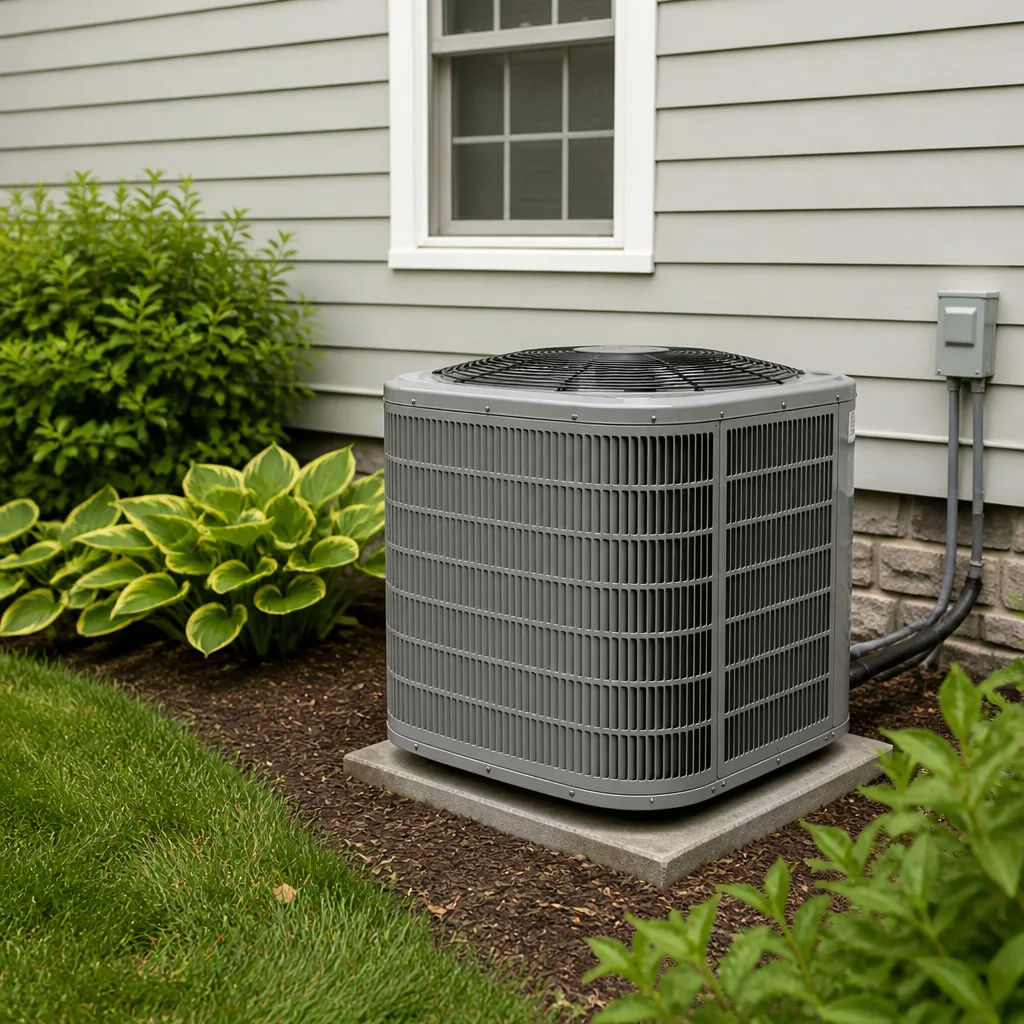 Carrier
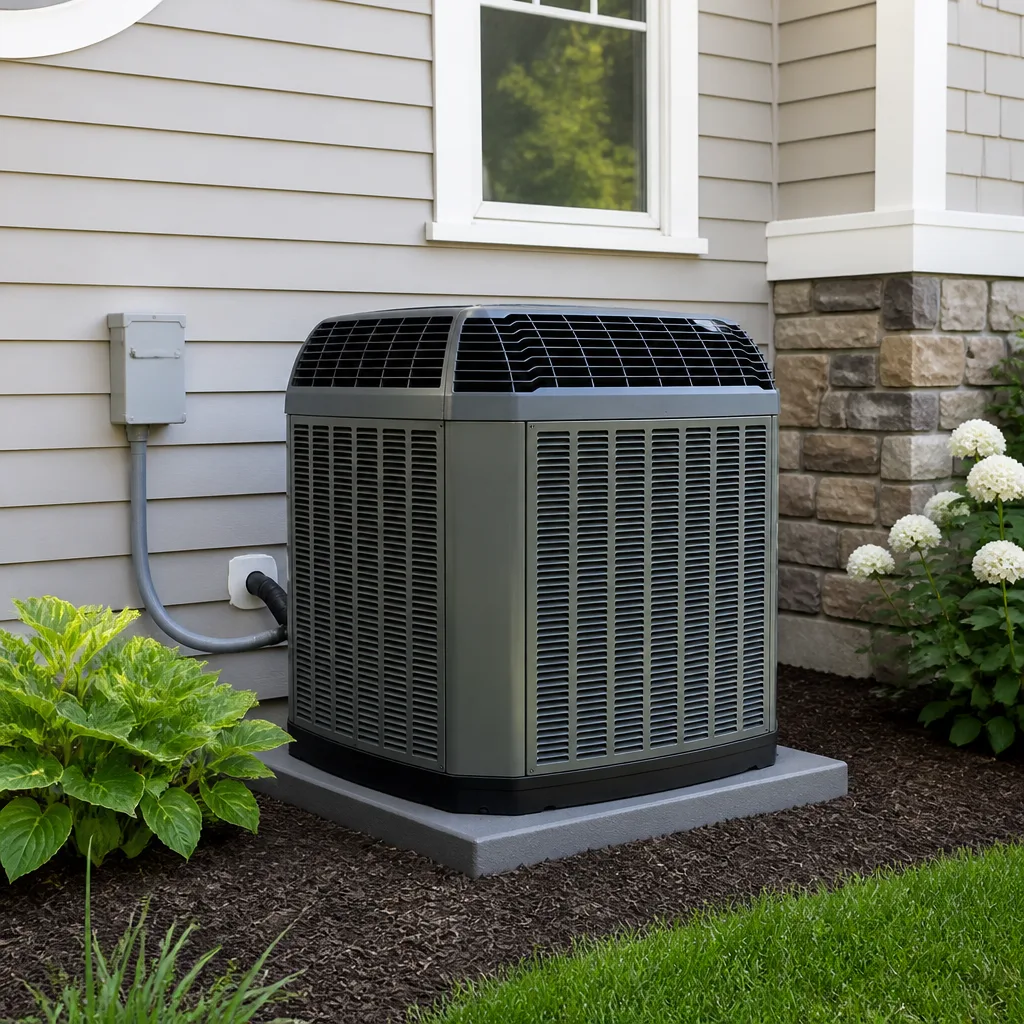 Trane
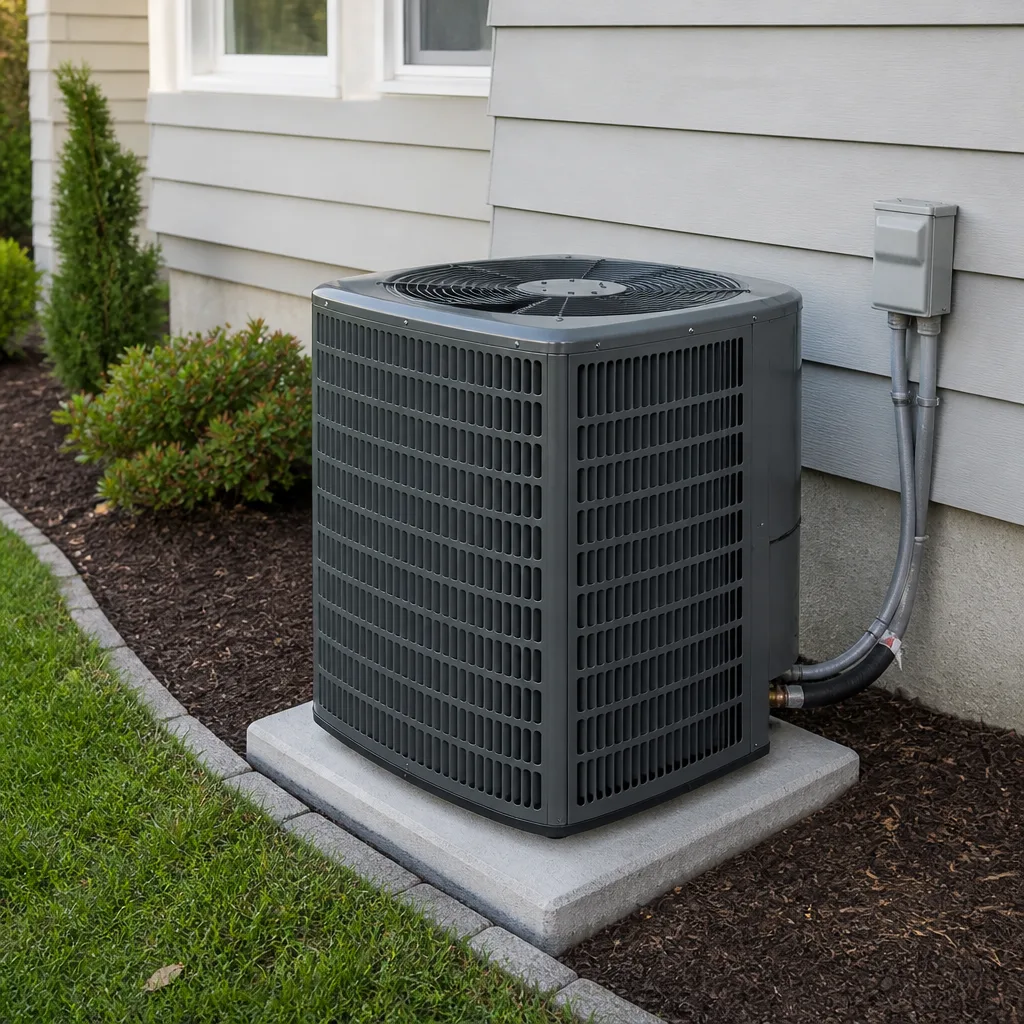 Goodman
Seasonal tune-up and full diagnostic on your Carrier, Trane, or Goodman system - readings shown to you before any repair is proposed
Diagnosis first, numbers second - you approve the repair price before a single part goes in.
Get your free estimateHVAC Warning Signs: A Sunrise Manor Homeowner’s Reference Guide
Most warning-sign lists treat every symptom as equally urgent, and that’s the problem. A grinding blower motor and a squeaky cabinet door get filed under the same heading, so homeowners either panic over nothing or wait out a failure they could have caught. This guide does it differently. We sort HVAC symptoms by how long you realistically have before something quits: hours, days, weeks, or months. Sunrise Manor summers don’t give equipment much slack, so the timeline matters more here than in milder climates. You’ll learn what each sound and behavior actually points to, which “problems” are normal for your system type, and how to document symptoms so a technician can diagnose faster.
Quick Answer
HVAC warning signs fall into three time tiers: act within 24 hours (buzzing capacitors, screeching bearings, hissing refrigerant, burning smells), watch for one week (uneven room cooling, weak airflow, short cycling), and track over a month (rising utility bills, thermostat lag, longer run times). In Sunrise Manor, where summer afternoons push past 110°F, a tier-one symptom rarely stays minor for long. Fast dispatch from 7am to 7pm, Sunday through Friday, means most problems get looked at while they’re still cheap to fix.
Styles & brands we work with
- AC repair
- Furnace & heating
- Heat pumps
- Ductless mini splits
- Carrier
- Trane
- Goodman
Table of Contents
- Why We Sort Warning Signs by Timeline, Not Severity
- Act Within 24 Hours: The Immediate Failure Indicators
- The One-Week Window: Symptoms That Reveal Themselves Slowly
- The Month-Range Decline: Bills, Thermostats, and Run Times
- Warning Signs That Are Actually Normal Operation
- How to Document Symptoms Before the Technician Arrives
- Repair or Replace: Reading the Warning Signs Together
- Common Mistakes to Avoid
- When to Call a Professional
Why We Sort Warning Signs by Timeline, Not Severity
Severity is a judgment call a homeowner isn’t equipped to make on a machine they can’t see inside. Timeline isn’t. When you know a sound gives you roughly three days of cushion versus three months, you can decide whether to rearrange your week or just keep a note.
The desert changes those timelines. A capacitor running at the edge of its tolerance in a 70°F climate might last a whole season. The same capacitor in Sunrise Manor, on a rooftop or a sun-baked side yard, is being asked to hold a startup load while ambient temperatures cook the housing. Electrical components that run hot age faster, and the margin between “working” and “failed” narrows. That’s why we treat certain sounds as countdowns rather than curiosities.
There’s a second reason the timeline frame works better in Sunrise Manor specifically. Housing stock here is a mix: older block homes with original ductwork, newer construction with tighter envelopes, manufactured homes with compact packaged units. Each of those systems fails in its own way, and each gives a different amount of warning. A symptom that means “watch it” in one home can mean “call today” in another. The timeline tells you how urgently to act; the technician tells you why.
Use the tiers below as triage. Tier one is hours to a few days. Tier two is roughly a week. Tier three is a month or more. When a symptom straddles two tiers, treat it as the more urgent one.
Act Within 24 Hours: The Immediate Failure Indicators
These are the cues that put a system on a short clock. Some of them are calling you before a failure. Others mean a failure has already started and you’re seeing the early stages. Either way, the move is the same: stop running the system if it sounds wrong, and get it looked at before the next heat wave.
- A buzzing or humming that won’t resolve into a normal start. This is usually a capacitor losing its ability to give the compressor or fan motor the jolt it needs to spin up. The compressor tries, strains, and either trips its internal overload or locks out. Once it locks out on a hot afternoon, the house has no cooling until someone diagnoses it.
- A high-pitched squeal or metal-on-metal screech. That’s a bearing, typically in the outdoor fan motor or the indoor blower. Bearings don’t heal. They shed material, heat up, and eventually seize. A seized blower motor in summer takes the whole system down, and if it happens to be an older unit, the failed motor can take the control board with it.
- A hiss or a visible oil sheen near refrigerant lines. Refrigerant is under pressure, and a hiss means it’s escaping. The oil stain is a telltale: refrigerant carries lubricant with it. Low charge makes the compressor work harder and run hotter, which is exactly what shortens its life.
- A burning or hot-plastic smell from the indoor unit or at the thermostat. Stop the system and leave it off. Smells like this point to wiring, a failing blower motor, or an overheating control board. Electrical faults are not a wait-and-see item, and this is where we tell homeowners plainly: don’t open the panel and don’t poke at it yourself. Call a trained technician.
- Ice on the refrigerant lines or the indoor coil while the system runs. Ice means the coil is running below freezing, which happens with low refrigerant or restricted airflow. Running the system in that state does further damage to the compressor.
If you hear any of the first three, shut the system down at the thermostat and call. We answer 24/7. Fast dispatch from 7am to 7pm, Sunday through Friday, gets a technician to the door while the problem is still a repair rather than a replacement. If your call comes outside those dispatch hours, it’s booked into the next opening.
The One-Week Window: Symptoms That Reveal Themselves Slowly
You have roughly a week to act on these. They rarely cause sudden failure, but they compound, and in Sunrise Manor the compounding happens fast. Watch them for a few days so you can describe a pattern, then get them checked.
Uneven cooling room by room is the classic one. If the front bedroom is comfortable and the back bedroom runs 6 to 8 degrees warmer, that’s a pattern worth understanding. In desert housing it usually points to one of three things: a duct leak or disconnected run in an attic that’s baking at 130°F, a blower that’s lost some of its push, or a refrigerant charge that’s drifted low enough to reduce the coil’s capacity. Attic ductwork is a common culprit here because the temperature difference between the duct and the attic is enormous, so any leak bleeds cooling into a space nobody occupies. The three symptoms look identical from the thermostat, which is why a technician checks all three before recommending anything.
Weak airflow at the registers is a separate signal. A dirty filter is the first thing to rule out, and it’s the one fix a homeowner can do without help. If a fresh filter doesn’t restore the airflow, the restriction is inside: a fouled evaporator coil, a blower wheel packed with dust, or a duct run that’s collapsed or come loose.
Short cycling deserves its own mention. A system that starts and stops every few minutes is either oversized, low on refrigerant, or fighting a thermostat that’s reading the room wrong. None of those fix themselves. Each one shortens compressor life because every start is a hard draw.
If your home runs one of the nine major brands we service, whether that’s Carrier, Trane, Lennox or another on the list, the diagnostic path is the same. What changes is the parts and the specs we’re working from. Nine major brands, one call.
The Month-Range Decline: Bills, Thermostats, and Run Times
This tier is the slow leak of performance. Nothing sounds wrong. Nothing smells. The system just works a little harder every week, and the first place you notice is the utility bill.
Compare the same month year over year, not month to month. Seasonal swings make month-to-month comparisons useless. But if your July bill comes in meaningfully higher than last July and your habits haven’t changed, that’s a data point. When the increase is steady rather than a one-off spike, we treat it as a system efficiency signal rather than a rate change.
Thermostat response lag is the next one. You set the temperature down and it takes noticeably longer than it used to for the house to get there. Or the system runs for long stretches and never quite satisfies the setpoint. That points to the system losing capacity, and there are two broad causes: a coil fouled with dust and debris (common in a dusty desert environment), or a refrigerant charge that has slowly dropped. A fouled coil can often be cleaned. A slow refrigerant leak needs to be found before it’s recharged.
Outdoor unit run-time creep is the third. If you’ve noticed the condenser kicking on earlier in the morning and running later into the evening than it did a year ago, that’s the system spending more time per degree of cooling. It’s the single most reliable early indicator that efficiency is slipping, and it’s easiest to catch if you write it down.
Left alone, tier three slides into tier two and eventually tier one. Catching it at the month stage is when a repair stays a repair. When a system reaches the point where the honest answer is replacement, we say so and quote a AC installation with a written fixed price and a set install date.
Warning Signs That Are Actually Normal Operation
Not everything that looks like a problem is one. We see unnecessary service calls every summer, and we’d rather save you the trip. Here’s what’s supposed to happen.
- Long, steady run times on a two-stage compressor. A two-stage system is designed to run longer at lower capacity. That’s the efficiency trick. If your outdoor unit hums along for hours instead of cycling hard and fast, that’s the system doing its job.
- A blower that ramps up and down gradually. Variable-speed air handlers ramp rather than snap on. If the fan speed changes gently instead of kicking to full immediately, that’s the design, not a failing motor.
- Water around the outdoor unit on a humid morning. That’s condensate draining off the coil, and it’s normal. Standing water that never drains, or water pooling inside near the air handler, is a different story and worth a call.
- A clicking sound at the thermostat after a cycle ends. That’s the relay switching off. It’s expected.
- The system running longer on a 112°F day than a 95°F day. Of course it does. More heat load means more run time. What matters is how it behaves relative to itself a year ago, not relative to a mild day.
Knowing your system type is half the battle. If a technician has told you that you run a two-stage compressor or a variable-speed air handler, adjust your expectations accordingly and skip the worry over long run times. Whatever system you have, we work on it, and we’ll tell you honestly when a behavior is normal and when it isn’t.
How to Document Symptoms Before the Technician Arrives
A clear symptom log cuts diagnostic time and often cuts the bill with it. Here’s the routine we recommend to every homeowner in Sunrise Manor.
- Write down the time of day and the outdoor temperature. A symptom that only appears in late afternoon heat tells a different story than one that shows up at 8am.
- Note the thermostat setpoint and the actual indoor temperature. The gap between them is the most useful single number on the page.
- Describe what the system was doing when the symptom appeared. Starting up, running steadily, or shutting down. “Buzzing for three seconds then quiet” is far more useful than “makes a noise.”
- Record which rooms are affected. One room, one side of the house, or everywhere.
- Note anything you’ve changed recently. A new filter, a thermostat schedule change, a breaker you reset.
- Photograph the thermostat display and, if accessible from outside, the outdoor unit. Don’t open panels. Just photograph what’s visible.
That log gives the technician an interpretation before they’ve touched a gauge. It turns a symptom into a working hypothesis: a pressure issue, a duct issue, or something in the blower assembly. Faster diagnosis, targeted repair, and fewer parts swapped on a guess.
Repair or Replace: Reading the Warning Signs Together
One tier-two symptom on an otherwise healthy system is a repair. Three tiers stacked on the same unit is a harder conversation, and it’s one worth having honestly. A single buzzing capacitor means you replace the capacitor. A squealing outdoor fan motor plus a rising bill plus short cycling on a unit that’s already showing its age means you’re buying one repair after another, and that’s when replacing the system starts to win the math.
We handle both sides of that decision in-house, so nobody hands you off mid-diagnosis. What we do is lay out what’s failed, what’s likely to fail next, and what the repair budget looks like against a replacement. Then you decide. If the answer is replacement, we’ll quote a written fixed price on the new system with a set install date, and we’ll walk through the paperwork thoughtfully so the choices are clear. If the answer is to fix what’s there, we’ll fix it and send you off with a better sense of what to watch. If you want to step back and get a fuller picture of what we do across cooling and heating, start with our AC Repair Sunrise Manor page.
And on the heating side, don’t think repair stops at cooling. A furnace making a low rumble or failing to light isn’t a tier-three symptom in a Sunrise Manor winter, it’s a call-today symptom given the mild but real cold snaps. Our furnace repair service exists for exactly that moment. Heating and cooling covered year-round, one company.
Gas furnaces deserve a specific safety note. If you smell gas, smell combustion byproducts, or see a scorched area near the furnace, don’t troubleshoot it yourself. Gas lines and combustion components are a trained-professional job, full stop. Shut it down, get out of the area if needed, and call.
Common Mistakes to Avoid
- Ignoring a single symptom because the house is still cool. A bearing squeal can run for a week before it seizes, and the system will cool fine the whole time. Waiting until it fails moves you from a motor replacement to a motor plus a board, and possibly a system replacement.
- Bumping the thermostat down 5 degrees to force the house cooler. In Sunrise Manor, this pushes the system toward a longer run, not a faster one, and doesn’t fix a capacity problem. It also masks the symptoms that would tell a technician what’s actually wrong.
- Diagnosing by sound alone and buying a part. A capacitor buzz and a failing compressor can sound similar from 20 feet away. Both are cheap to fix when diagnosed correctly. Only one is cheap to fix when diagnosed by guesswork.
- Assuming a long run time means something’s broken. On a two-stage system in July, long runs are normal. Don’t call for a service visit you don’t need. Check the thermostat, check the filter, then call if the behavior is new.
- Skipping the filter and going straight to “the AC is broken.” A restricted filter is the most common cause of weak airflow, and it’s the cheapest fix there is. Rule it out first.
- Ignoring a dusty outdoor coil. Desert dust and cottonwood fluff build up on the outdoor coil and cut its efficiency. If the coil face is matted, it’s time for a cleaning, not a refrigerant charge.
- Not writing anything down. Without a log, the technician arrives to a system that isn’t currently doing the thing, and you’re left describing a noise from memory. Document, then call.
When to Call a Professional
Call us if you hear any tier-one sound: a buzzing that won’t start, a screech, a hiss, or anything burning-smelling. Call if you see ice on the lines or water pooling inside. Call if a fixture or panel smells hot. Call if the system can’t keep the house at your setpoint on a hot day. Call if you’ve got ten days of thermostat response lag and no improvement. Call if gas is involved, and don’t troubleshoot it yourself.
For a tier-two pattern, a few days of your own log is useful. Then call. For tier-three trends, don’t call yet, just write down what you’re seeing. Then call. We answer 24/7. Fast dispatch from 7am to 7pm, Sunday through Friday, means most tier-one and tier-two problems are seen the same day you call. Estimates are free, and the price is set per job by a written estimate. AC Repair Sunrise Manor covers the whole system, so a call for furnace repair in January gets the same technicians who diagnose your AC in July, and our Sunrise Manor service range covers the whole of the city.
See the difference
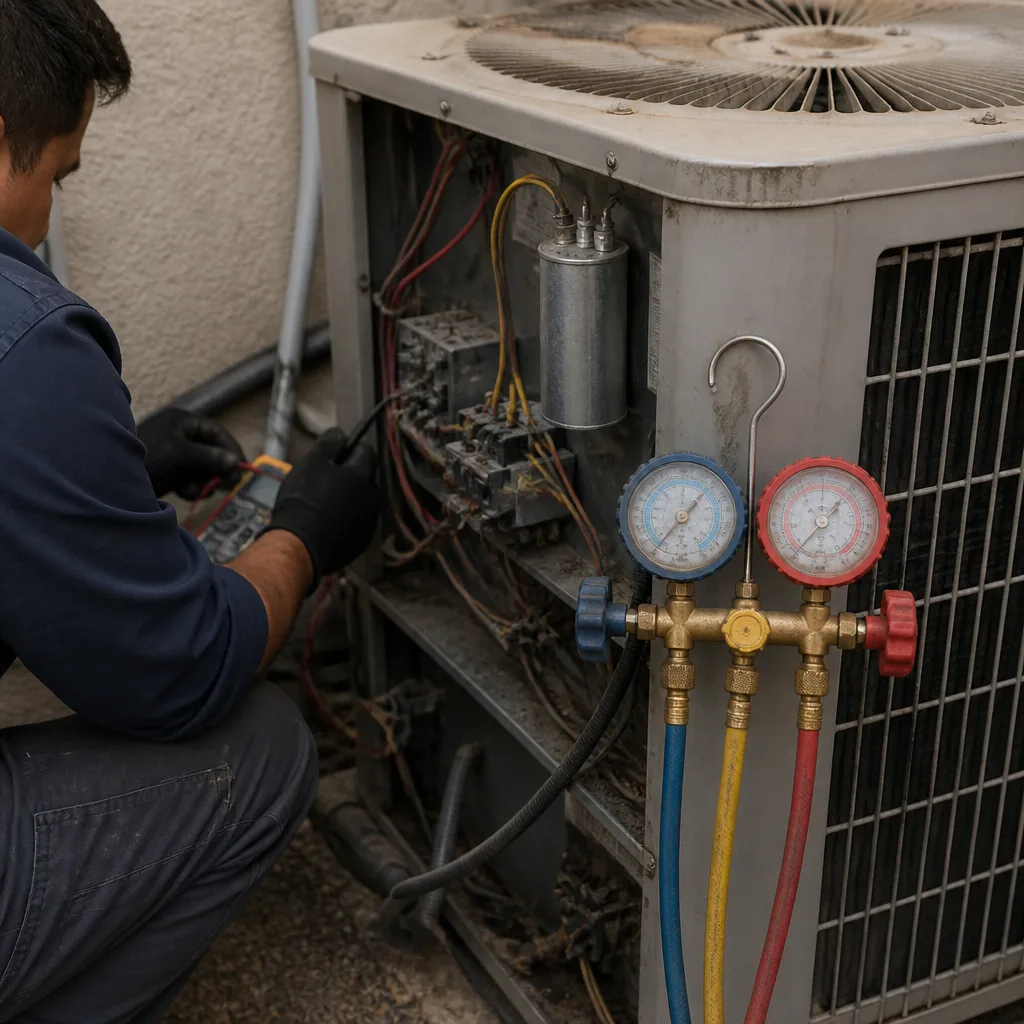 Before
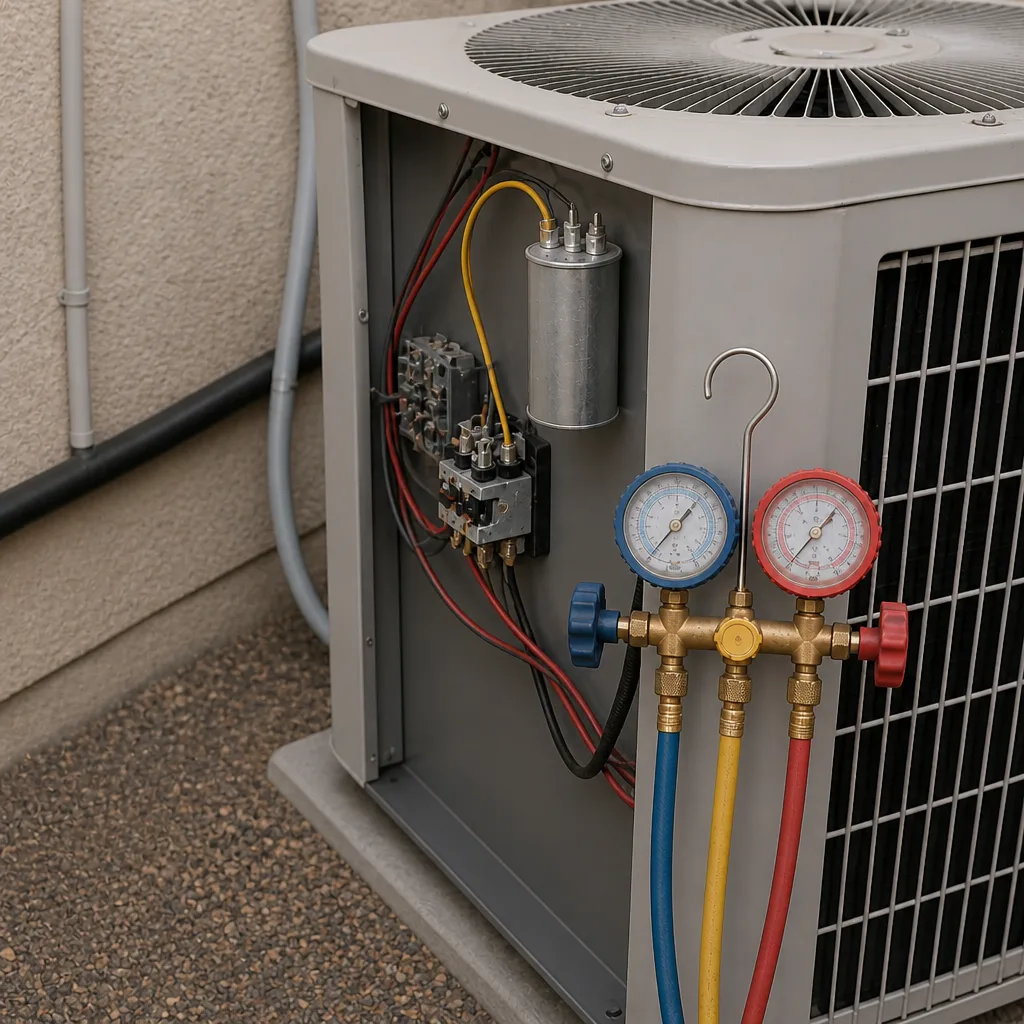 After
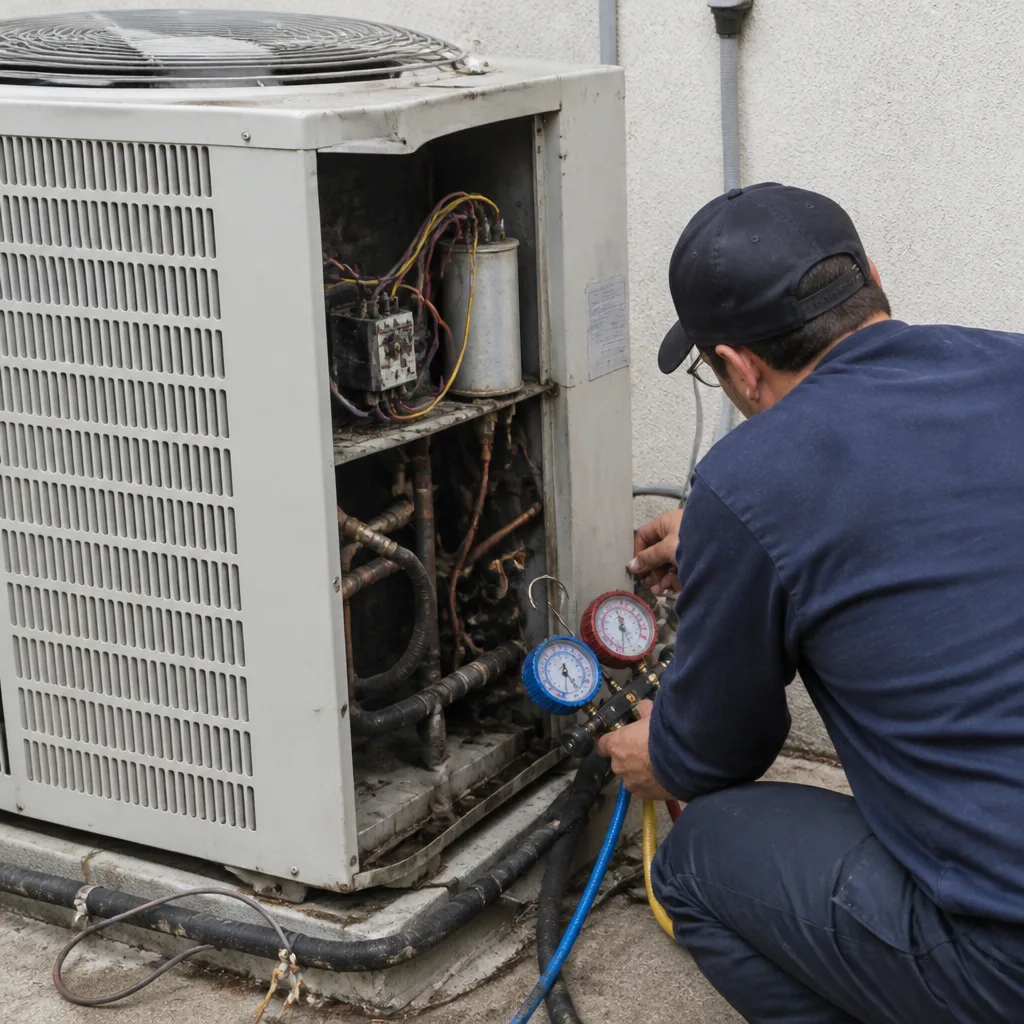 Before
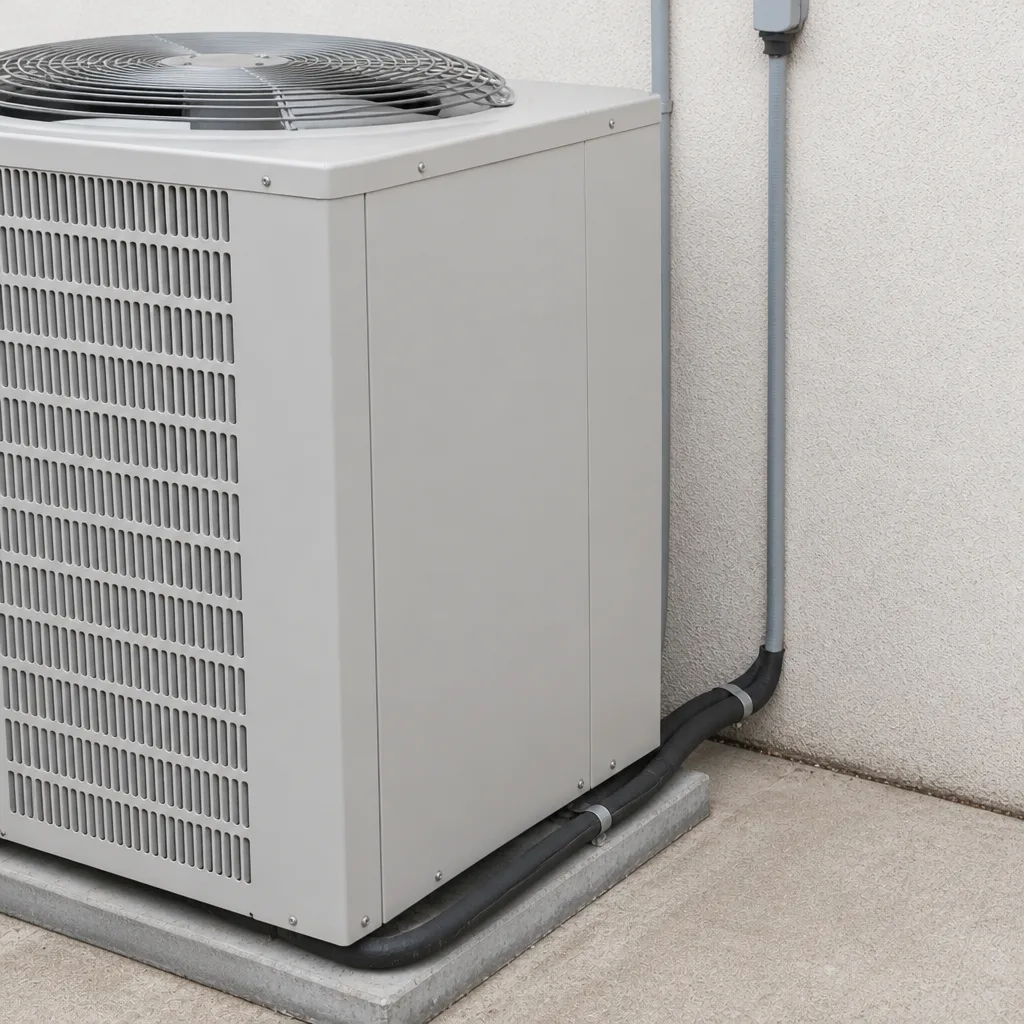 After
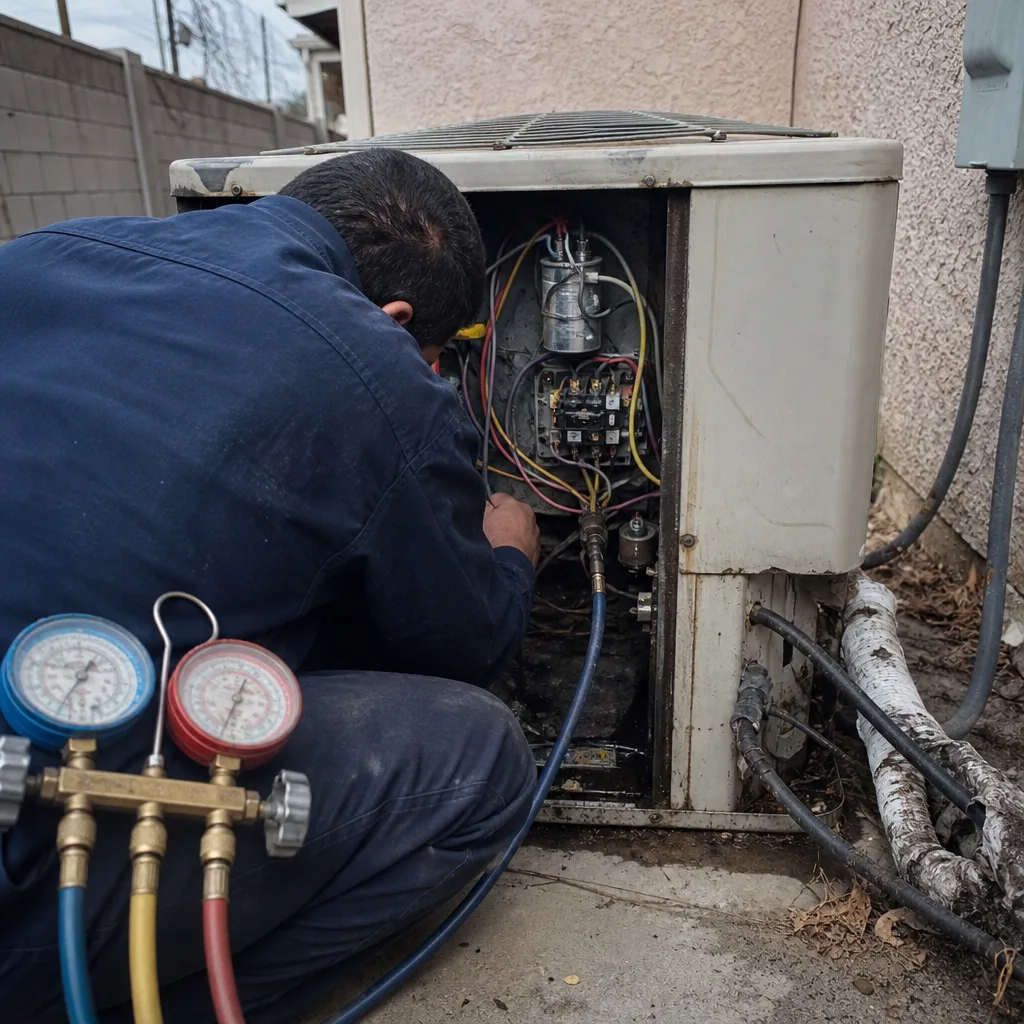 Before
 After
Frequently Asked Questions
The strongest early signal is a buzzing or humming that won’t resolve into a normal start, usually a capacitor on its way out, plus ice forming on the lines or coil and a burning smell near the indoor unit. Any of those means stop the system and call, and fast. Fast dispatch from 7am to 7pm gets a technician out before the compressor locks out. Call (855) 356-3116 for a free estimate.
It’s not dangerous in the sense of injury, but it is damaging to the compressor and it’s hard on your comfort in a 110°F+ afternoon. Short cycling usually means low refrigerant, an oversized system, or a thermostat reading the room wrong. Get it diagnosed before the compressor pays the price. We answer 24/7 at (855) 356-3116.
Often yes. A visible refrigerant leak is a tier-one symptom, and we can diagnose it the same day you call in most cases. Leak repair might need parts, in which case the system stays off until the parts are in hand. Call for a free estimate and a same-day diagnosis window.
Yes, if the increase is steady year over year rather than a rate change. A rising bill with no change in habits points to a fouled coil, a slow refrigerant loss, or duct leakage in a hot attic. That’s a good reason to have the system looked at before it becomes a tier-one failure. Call (855) 356-3116 for a free estimate.
Long run times on a two-stage compressor, a blower that ramps up gradually on a variable-speed system, condensate around the outdoor unit on a humid morning, and a click at the thermostat after a cycle ends. Those are by design. Anything metal-on-metal, anything burning, anything hissing, or anything that suddenly became worse is not.
Yes. We’re set up for full lifecycle coverage on both sides, and we’re certified to work on nine of the industry’s leading brands, including Carrier, American Standard, DuPage-Trane, Lennox, Goodman, Rheem, York, Daikin, and Bryant. A call about a buzzing outdoor unit and a call about a furnace that won’t light go to the same company. Heating and cooling covered year-round.
The Bottom Line
Warning signs are easier to act on when you know how much time you have. Tier one is hours to days: buzzing, screeching, hissing, burning smells, ice. Tier two is about a week: uneven room cooling, weak airflow, short cycling. Tier three is a month or more: rising bills, thermostat lag, run-time creep. Write down what you see, rule out the filter, and know which behaviors are normal for your system type. Then call when the tier says to. A signature buzz in June in Sunrise Manor is a countdown, not a curiosity. Call (855) 356-3116 for a free estimate. We answer 24/7. Fast dispatch from 7am to 7pm, Sunday through Friday.
Written by the team at AC Repair Sunrise Manor.